What Is a Secondary Cataract—And How Is It Treated?

The return of cataract symptoms months or even years after it’s been removed can, quite naturally, be a bit of a shock. However, the rather inaccurately termed “secondary cataract” is not a new one forming.
Instead, it’s highly likely to be a condition called posterior capsule opacification (PCO), which—you’ll be very glad to hear—is simple to treat with permanent results, and can be performed by a cataract surgeon in minutes.
What is Posterior Capsule Opacification
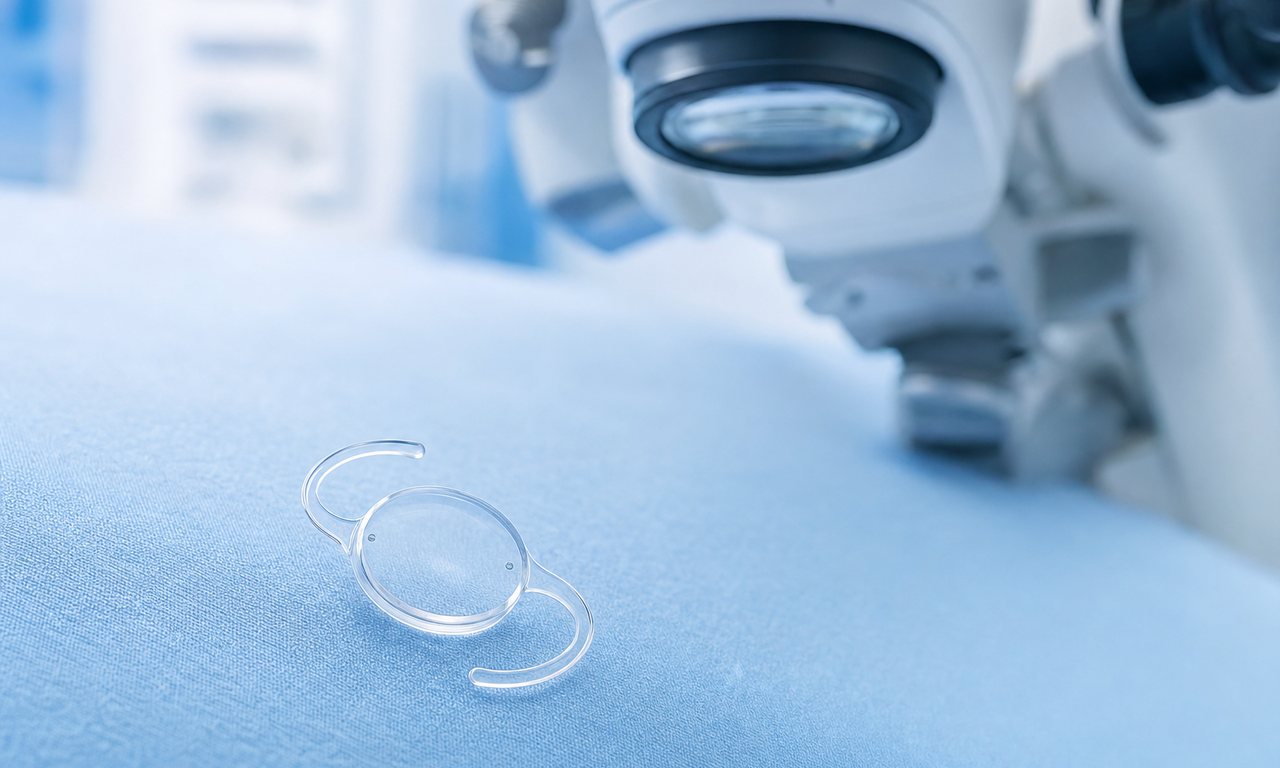
During cataract surgery, the diseased lens is removed and replaced with an artificial one, called an intraocular lens (IOL). This needs to be anchored within the eye. So, during a cataract operation, the front part of the lens capsule, which holds and protects the natural lens, is removed. But we leave the rear part in situ, because this is what the IOL is attached to. This bit is known as the “posterior capsule”.
PCO occurs when some of the natural proteins and lens cells within the eye settle on this, causing a hazy film or even a wrinkle across it. This is not a cataract growing back, because these elements can’t stick to the IOL. Instead, think of it as a window behind the lens that becomes cloudy and frosted. This means that the light entering the eye doesn’t have a clear passage through. Instead, it becomes scattered and, you guessed it, causes symptoms very similar to the original cataract—and this is where the name, secondary cataract, comes from.
With PCO, typical symptoms include:
- Blurred vision
- Issues with glare
- Seeing halos around a light source
- Reduced contrast sensitivity
Why and When Does PCO After Cataract Surgery Occur?
PCO doesn’t happen to everyone, although it is fairly common. According to the National Library of Medicine, it affects anything from 20% - 50% of people after cataract surgery. Factors that drive the likelihood include:
- Your age: The younger you have surgery, the more likely you are to experience PCO. Children are considered to be a high-risk group
- Previous eye surgery: Especially a vitrectomy, which is surgery to remove some or all of the jelly (vitreous humor) within the eye
- The design of the IOL: The latest lenses are designed to reduce the risk of PCO
PCO happens because of the body’s healing response, is completely normal, and is nothing to worry about. It’s certainly not a sign that anything has gone wrong.
As to when it might happen… Well, it can be as soon as months after the operation, or it might happen years post-op—or never at all. However, most instances tend to happen 2-5 years after surgery. But the great news is that there’s a quick, permanent fix that takes minutes to perform and has pretty much no side or after-effects.
Secondary Cataract Treatment
The official name for the procedure to cure a secondary cataract is YAG laser capsulotomy. It’s done in the doctor’s office, requires no preparation on your behalf, and takes barely more time than a dilated eye examination.
YAG Laser Capsulotomy: a patient’s perspective
Once you’ve been diagnosed with PCO, which will most likely happen during one of your regular eye examinations, you’ll be scheduled for outpatient treatment. On the day you can expect your appointment to go something like this:
- No special prep: No fasting, no pre-procedure steps, no medication changes (unless you’re exceptionally high risk, which is extremely rare). There are no scalpels involved, no stitches, no eye patches… Everything is done with the application of a laser.
- What it feels like: Firstly, and very importantly, it won’t hurt. You’ll have some dilating and numbing eye drops put in and, once they’ve taken effect, will be seated at a special laser machine and asked to focus on a target light. The surgeon uses the laser to create a tiny opening in the clouded posterior capsule, during which you might hear some clicking and maybe see a few flashes. It only takes a few minutes.
- Afterwards: You won’t feel anything afterwards either. In fact, the worst part of the entire procedure is waiting for the eye drops to wear off. You’ll be able to go home pretty much straight away, although you will need someone to drive you until the effect of the eye drops has gone (typically 24 hours). Most people experience improved vision either immediately or within hours. You’ll be given anti-inflammatory eye drops to use for about a week.
And that’s it… A single, simple, fast, and highly effective treatment. You may get a few new floaters, which are usually transient. These are the remnants of the capsule pieces that have been broken up and are absorbed into the eye jelly. disappearing within a few days or weeks.
YAG Laser Capsulotomy: a surgeon’s perspective
As a surgeon, performing a YAG laser capsulotomy is targeted, routine, and—if you don’t mind hearing it—profoundly satisfying. After all, there’s nothing better than seeing a patient with cloudy vision after cataract surgery, diagnosing PCO, and fixing their problem easily and virtually immediately.
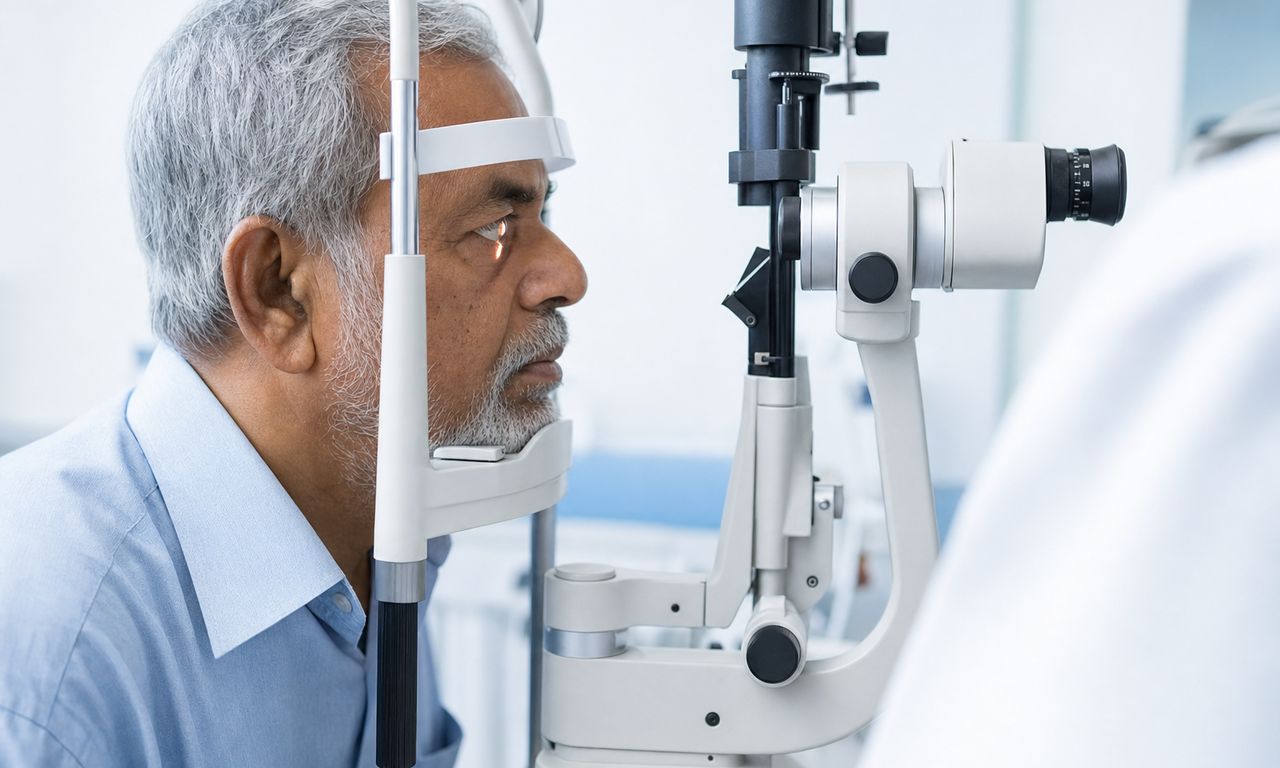
- Pre-procedure: The first step is the diagnosis, which is done through visual examination of the eye, using a special magnifying lens to give a detailed view of the posterior capsule.
- The procedure: The size and location of the opening is carefully planned. It must be central and large enough to allow light to flow through but small enough to ensure continued IOL stability. The laser itself is highly targeted, allowing extreme accuracy during firing. The opening is typically 3-4mm in diameter, and the laser doesn’t go anywhere near any other part of the eye or the IOL itself.
- How the laser works: While you focus on the target light, the laser is applied in short pulses, usually in a circular pattern. This disrupts the tissues of the capsule, making teeny fissures in the tissue. Each pulse makes another ‘dot’, until they connect up to create the required circular opening. Once complete, this retracts or falls away, allowing the light to flow correctly once again. Typically, this takes around 60-90 seconds to complete.
- The “wow” moment: As a surgeon, I have to say that this is one of the most satisfying parts of the procedure, as most people sit up, focus on something and realize that their vision has cleared.
Naturally, safety and accuracy are paramount. Extremely precise measurements are taken to ensure accuracy, and the laser is double and treble checked to ensure the exact alignment. And, of course, before anything is carried out, there will be a full discussion of risk, potential side effects, aftercare, and consent. The success rate is extremely high, at around 95%, so it really is a one-step, permanent fix for pretty much everyone.
If your vision has become cloudy after cataract surgery, find a cataract surgeon in our directory — YAG treatment is quick and highly effective.
This article is general information about cataract surgery, not medical advice, and it is not a substitute for consultation with a qualified ophthalmologist. Read our medical disclaimer.
Choosing a Cataract Surgeon?
Compare 304 top cataract surgeons with real patient reviews, ratings, and locations.
Browse the directory · Search by ZIP · Read the national guide
Latest Articles
Toric IOL for Astigmatism: A Surgeon's 2026 Guide

Same-Day Cataract Surgery on Both Eyes (ISBCS): A Surgeon's 2026 Guide
Pseudoexfoliation Syndrome and Cataract Surgery: What Patients Should Know