When was the First Cataract Surgery?
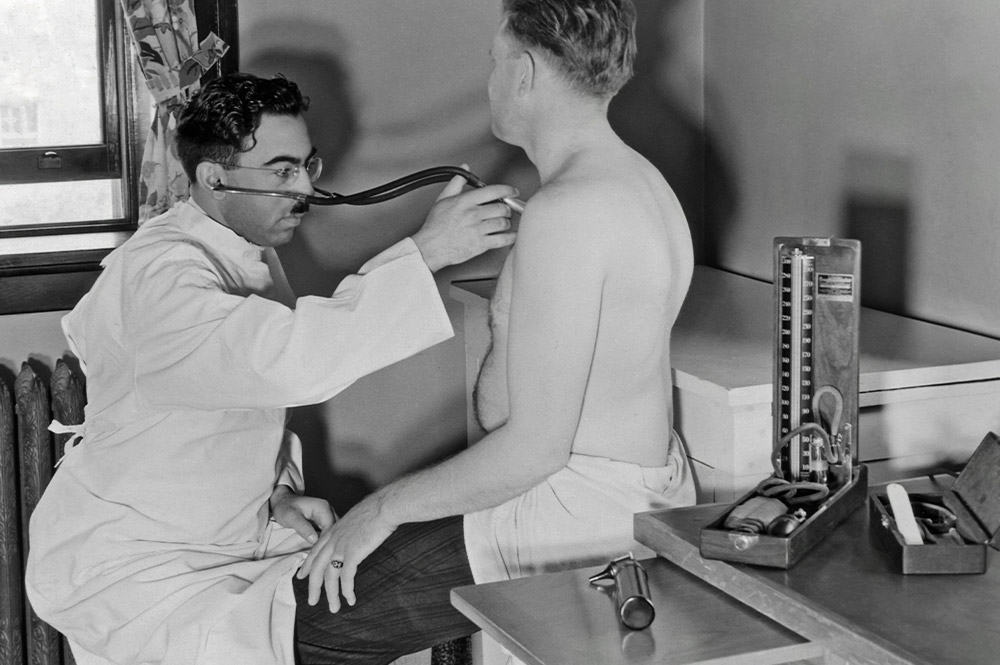
Today’s cataract surgery is an advanced, computer-aided procedure that’s carried out in minutes. But when was the very first cataract operation performed? If you guess that it might be sometime in the 1900s or even 1800s then prepare to be amazed…
Because the very first attempt to restore eyesight from advanced cataracts is believed to have been done in 600 B.C. Yes, you read that right… B.C.!
From 600 B.C. to Today: The History of Cataract Surgery
- 600 B.C. The first recorded cataract surgery
- When was the first cataract surgery as we know it today performed?
- The breakthrough procedures
600 B.C. The first recorded cataract surgery
That first procedure in 600 B.C. was carried out by Susrata of India. Unlike today’s cataract operations, it didn’t involve removing the diseased lens. Instead, a long instrument was inserted into the eye to push the lens further back into the eye. While this didn’t create the vision improvements that we get today, what it did do was remove the total blockage that stopped light passing through the eye at all (rendering them virtually blind).
The procedure was known as “couching”. It was carried out to provide the person with enough vision to be able to move around safely. Of course, the risks were very high, with total blindness often being the outcome.
It may also surprise you to know that, even today, couching is used by so-called healers in some parts of the world.
Fast forward to the 900 A.D. or so, and an Egyptian surgeon invented another procedure. (Warning—you might need a strong stomach to read this bit…). Instead of pushing the lens further back in the eye, he would use a hollow tube that, once inserted, he would then use his mouth to suck out the lens. Enough already! Let’s just leave that one there…
When was the first cataract surgery as we know it today performed?
The first instance of an extracapsular lens extraction occurred in France in 1747. This involved making a large incision into the eye to remove the lens. As you might imagine, the procedure was high risk-and often left patients with unwanted side-effects, like glaucoma. A mere six years later, this procedure was adapted so that the incision didn’t need to be so large. The surgeon removed the lens by increasing the intra-eye pressure with his thumb.
Not many advances happened over the next couple of centuries.1957 saw the introduction of another procedure that broke down some of the interior eye anatomy to help remove the lens. This was improved in 1961 by using a probe that froze tissue that it touched. While this was certainly preferable to all other previous cataract removal attempts, there was still a 5% chance of blindness.
The breakthrough procedures
We need to wind back a few years, to 1949, to when the first intraocular lens IOL) was invented. Much opposition surrounded this and the use of IOLs didn’t become commonplace until three decades later.
1967 saw the introduction of phacoemulsification (ultrasonic waves that break up the lens) that we know today. Again, this took another nearly 30 years to become commonplace.
These two elements are still at the heart of every cataract surgical procedure performed today. Of course, the procedure has been much-honed over the past few decades, leading to the cutting-edge surgery that we now benefit from. Let’s just all be thankful that we weren’t at the hands of those early pioneering surgeons—although without them we wouldn’t be fortunate enough to have the highly successful and fast procedures that are routinely performed today…
Find the right surgeon for you: search our directory and read real patient reviews before you book.
This article is general information about cataract surgery, not medical advice, and it is not a substitute for consultation with a qualified ophthalmologist. Read our medical disclaimer.
Choosing a Cataract Surgeon?
Compare 303 top cataract surgeons with real patient reviews, ratings, and locations.
Browse the directory · Search by ZIP · Read the national guide
Latest Articles
Cataract Surgery with Glaucoma: How Combined MIGS Procedures Work in 2026

Cataract Surgery with Macular Degeneration: Will It Help Your Vision?

Endophthalmitis After Cataract Surgery: Warning Signs, Incidence, and Modern Prevention