How to Choose Between Trifocal and Extended Depth-of-Focus IOLs
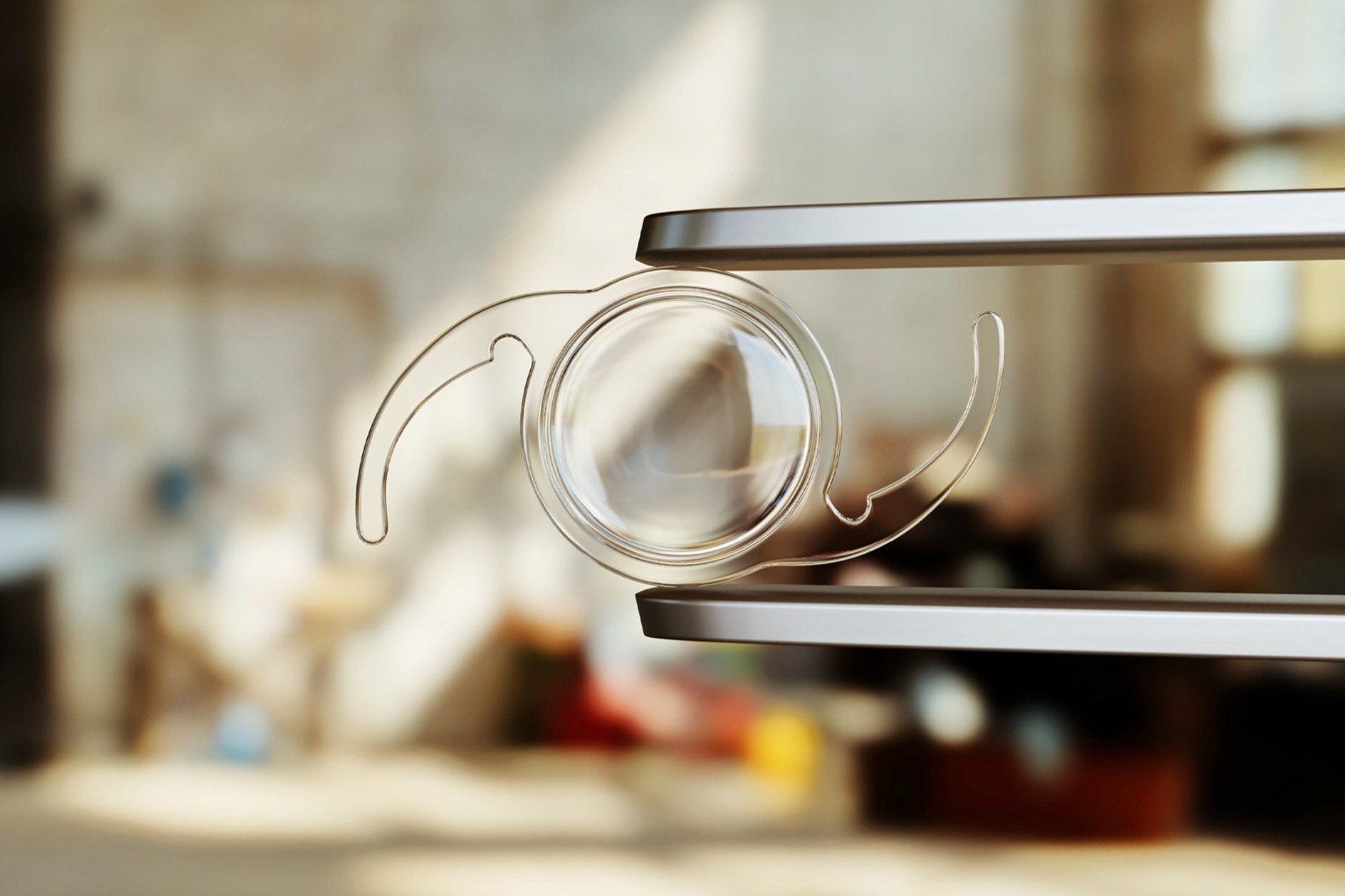
20, or even as little as 10 years ago, your choice of an intraocular lens (IOL) during cataract surgery was limited. Today’s landscape is vastly different, with those who are keen for, potentially, a life without glasses being almost spoilt for choice.
One such quandary is the trifocal vs. EDOF lens option. Both offer visual clarity at different distances, both are premium lenses, and both could mean that you don’t need to wear eyeglasses so much or not at all.
However, they are completely different products, each with pros and cons, and—crucially—support vision in singularly unique ways. Because of this, the question isn’t so much, “Which is the best cataract lens type?”, but more of, “Which IOL will best suit my expectations and lifestyle?”
Trifocal or EDOF: An IOL Comparison Guide
Let’s first talk about how each one works. A trifocal IOL functions in a similar manner to trifocal eyeglasses. Your prescription is built into zones on the lens—near, intermediate, and far—to provide three distinct focal points for light entering the eye. This means that, depending on where you’re focusing, the brain is able to determine clear vision at each distance.
An EDOF lens works in a completely different way. It stands for “extended depth of focus”, which means that it gives a single focal point. However, the design of the lens can bend and elongate the light entering the eye to provide a continuous range of vision at different distances.
Crucially though, EDOF lenses provide clarity for intermediate to far vision, without the near benefits you get from a trifocal.
The Main Differences Between Each Lens.
When it comes to what each brings once fitted, the key comparisons between the two are:
- The focal mechanisms: A trifocal lens has a sharper contrast between distances, meaning that—at least at first—it might be quite noticeable when you shift your gaze. An EDOF lens offers a more natural transition from one distance to another.
- Light sensitivity: Trifocal lenses are more prone to light scatter, meaning some people experience halos and glare, especially in low light conditions. This can be particularly noticeable when night driving. EDOF lenses tend to have fewer such issues.
- Near vision clarity: Trifocal lenses provide focus at all distances. EDOF lenses, however, often still require the use of eyeglasses for close-up vision, such as reading.
- The adjustment period: All IOLs have an adjustment period. Your brain has spent years learning to adjust to a cataract-clouded lens. Suddenly, it needs to relearn how to interpret an unimpeded flow of light once again. This tends to take a little longer if you’ve had a trifocal lens fitted, rather than an EDOF.
Who Should Choose an EDOF and Who Should Choose a Trifocal Lens?
This is an important choice that should be made in conjunction with your cataract surgeon. A good surgeon will take the time to understand what you expect from the lens, your lifestyle, your visual habits, and, naturally, your individual eye suitability for your preferred premium lens.
Questions we might ask you include:
- Are you keen for a life with little to no reliance on eyeglasses?
- Would you be happy to use glasses for close-up visual tasks?
- How much do you use a computer, tablet, cell phone, etc.?
- Is reading a big part of your life?
- What about other close-up tasks, such as knitting, needlework, woodwork, etc.?
- Are you highly active?
- Do you spend a lot of time playing a sport that requires vision at different distances, such as squash, tennis, or golf?
- Do you drive a lot? If so, do you have any problems driving at night?
- Are you sensitive to bright light?
All of these questions, and more, give the surgeon the information behind an IOL recommendation. Every patient has unique requirements, so a good surgeon takes the time to determine exactly what will suit. Plus, age-related cataracts occur in both eyes, so it’s highly likely both will be operated on, albeit at different times. This means that, in complex situations, a surgeon can potentially consider different lenses in each eye to achieve the right visual freedom. But that’s another subject entirely…
The best practices sit at the forefront of surgery and lens technology, are actively involved in evolving and new tech, and have matched patients to their ideal IOL for many years—explaining it all in an easy-to-understand manner.
If you’d like to find out more about the different IOLs on offer and whether a trifocal, EDOF, or perhaps another advanced option might best suit you, then we should talk.
Find the right surgeon for you: search our directory and read real patient reviews before you book.
This article is general information about cataract surgery, not medical advice, and it is not a substitute for consultation with a qualified ophthalmologist. Read our medical disclaimer.
Choosing a Cataract Surgeon?
Compare 303 top cataract surgeons with real patient reviews, ratings, and locations.
Browse the directory · Search by ZIP · Read the national guide
Latest Articles

Cataract Surgery with Glaucoma: How Combined MIGS Procedures Work in 2026

Cataract Surgery with Macular Degeneration: Will It Help Your Vision?

Endophthalmitis After Cataract Surgery: Warning Signs, Incidence, and Modern Prevention