What Is the Femtosecond Laser in Cataract Surgery?
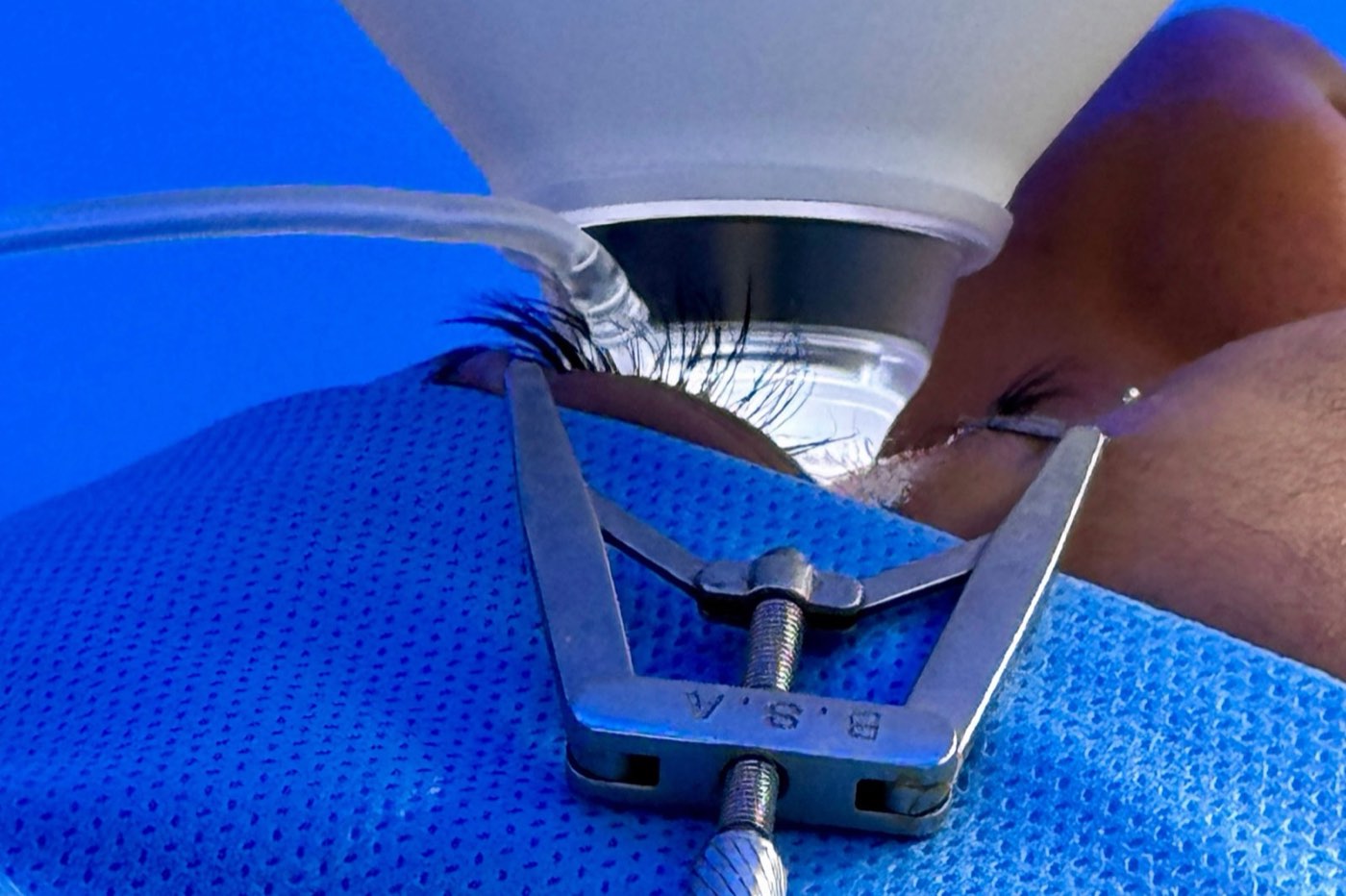
Femtosecond laser cataract surgery is one of two types that are regularly performed in the USA and around the world. You’ll probably hear it more commonly referred to by its more informal title of laser-assisted cataract surgery, or simply laser cataract surgery. The other type is called traditional cataract surgery.
The simple difference between the two is this:
- Traditional cataract surgery is performed manually, with the surgeon making a small incision in the cornea, then cutting through the membrane of the lens capsule to access the cataract-clouded lens. A tiny instrument is then inserted to deliver ultrasound waves at the lens. This breaks it down into pieces, which are suctioned out—a process known as phacoemulsification. Once done, the surgeon then manually attaches an intraocular lens (IOL) to the remaining part of the lens capsule. Because the incisions are so small, they generally heal naturally, meaning no stitches are required.
- Femtosecond laser cataract surgery uses a special kind of laser (a femtosecond, as the name suggests) to make the initial incision and break up the diseased lens. The exact anatomy of the eye is mapped into a computer program first, which then guides the laser very precisely throughout. Again, no stitches are usually needed.
The femto cataract procedure was approved by the FDA in 2010. However, the traditional procedure is still more commonly used. This is down to three main reasons:
- The cost: The additional cost of femtosecond surgery over and above that of a traditional procedure and premium IOL isn’t usually covered by health insurance (nor Medicare).
- Lack of surgeons with the training and equipment: Not all cataract specialists have been trained in this more advanced procedure, nor do they have the necessary equipment in their operating rooms.
- Patients don’t know about it: There’s often a lack of communication about the range of cataract IOLs available. This goes hand-in-hand with surgeons who don’t have the facilities/training to perform femtosecond laser cataract surgery.
Why Would I Need Laser Cataract Surgery? Femtosecond vs. Manual
The main reason you might choose a femto laser-assisted procedure is that it opens up a whole world of different IOLs.
The only type of lens that can be implanted during a traditional operation is a monofocal one. This provides focused vision at a single distance—usually far—and you’ll wear eyeglasses for up-close activities, like reading. If you have the more advanced laser-assisted operation, then your surgeon has many more IOLs at his disposal. You’ll discuss your suitability for each, which will be based on your lifestyle, eye anatomy, any health conditions, and your own personal preferences.
The intricate mapping and incredible accuracy of the femto procedure are necessary to ensure that the IOL is placed in exactly the right position, which reduces the chance of any visual anomalies.
Some examples of these premium IOLs include:
- Bifocal: Which provides focused vision at both near and far distance.
- Trifocal: As above, but also focus at mid-distance too.
- Toric: These can correct astigmatism.
- Extended Depth of Focus (EDOF): These use a clever technology that stretches the focusing point, allowing good near and far focus.
- Light-adjustable lenses (LAL): The only type that can have the prescription adjusted when in situ. This is done over a few appointments post-operatively. Once the correct focus is determined, it’s locked in, after which no more changes are possible.
- For many people, the monofocal lens that’s implanted during a traditional operation is fine. But if you have a desire for a life without eyeglasses, then one of the IOL options available when you have femtosecond laser surgery could be exactly what you’re looking for.
Use our directory to find a top cataract surgeon near you and compare real patient reviews before you decide.
This article is general information about cataract surgery, not medical advice, and it is not a substitute for consultation with a qualified ophthalmologist. Read our medical disclaimer.
Choosing a Cataract Surgeon?
Compare 303 top cataract surgeons with real patient reviews, ratings, and locations.
Browse the directory · Search by ZIP · Read the national guide
Latest Articles
Cataract Surgery with Glaucoma: How Combined MIGS Procedures Work in 2026

Cataract Surgery with Macular Degeneration: Will It Help Your Vision?

Endophthalmitis After Cataract Surgery: Warning Signs, Incidence, and Modern Prevention