Cataract Surgery with High Myopia: What Severely Nearsighted Patients Should Know
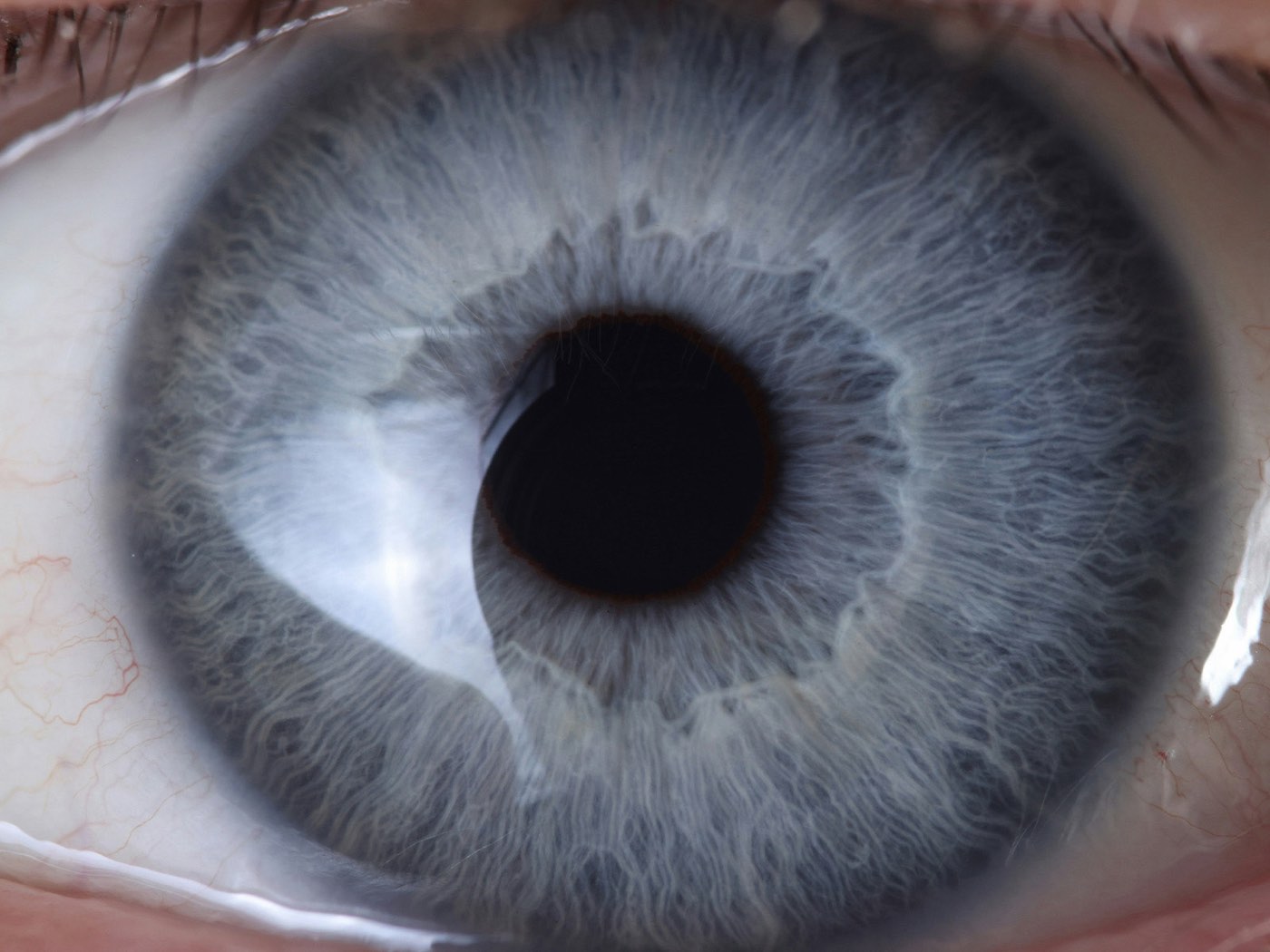
High myopia is not a contraindication to cataract surgery. It is a different operation. A -9.00 diopter eye with an axial length of 28 millimeters does not behave like the average eye your surgeon operates on. Lens power calculations are harder. The retina is thinner. The optimal intraocular lens choice is narrower. And the outcome, when planned carefully, is often the most dramatic improvement a patient will ever experience. This guide is written for patients in the -6.00 diopter and higher range, and for their families, who want to understand what changes about cataract surgery when the eye is long.
What "high myopia" actually means
Myopia is nearsightedness: light focuses in front of the retina rather than on it, and distance vision is blurred without correction. In clinical terms, the refractive threshold for high myopia is usually -6.00 diopters or more. But the more useful measurement for cataract surgery is axial length, the distance from the front of the cornea to the back of the retina. A normal eye is around 22 to 25 millimeters. Eyes with axial lengths of 26 millimeters or greater are considered highly myopic for surgical planning, and eyes beyond 28 millimeters require specific adjustments and often imaging beyond the standard preoperative set.
Pathologic myopia is a more severe subset. The eye has elongated to the point that structural changes appear: posterior staphyloma (a bulge in the back wall of the eye), chorioretinal thinning, lacquer cracks, and sometimes macular findings such as myopic maculopathy. Pathologic myopia is a separate diagnosis from "just very nearsighted" and it affects both candidacy and lens choice (aao.org).
Your preoperative workup should answer three questions: How long is the eye? Is the retina healthy? Are there macular changes that will limit the visual outcome regardless of the lens? We address each below.
Why a long eye changes cataract surgery
The physical operation of cataract surgery, phacoemulsification and IOL implantation, is mechanically similar in every eye. What changes in a long eye is the margin for error, and the specific decisions a surgeon must make before and during the case.
- The capsular bag is larger and the zonules (the threads that hold the natural lens in place) may be stretched or weaker. That changes how the surgeon stabilizes the lens during removal and how the IOL sits afterward.
- The vitreous is often already liquefied and partially detached. Posterior vitreous detachment occurs earlier in myopic eyes, and during surgery the fluid dynamics inside the eye behave differently from a shorter eye.
- The choroid and retina are thinner and less tolerant of pressure swings. Surgeons reduce infusion pressure and manage anesthesia to avoid sharp intraocular pressure changes.
- Low-power and negative-power IOLs behave differently. The lenses that go into long eyes are thinner, less refractive, and sometimes come from a different inventory than a surgeon's standard stock.
None of these are prohibitive. All are reasons the case should be planned, not templated.
IOL power calculation in long eyes
The single most important planning decision in a highly myopic cataract case is which IOL formula to use and which lens power it recommends. Old third-generation formulas such as SRK/T and Holladay 1 were built on populations with average axial lengths. Applied to long eyes, they tend to underestimate the needed power and leave the patient more hyperopic than planned. "Refractive surprise" is the common term. For a patient who has been nearsighted for 50 years, waking up +2.00 diopters is a disappointment.
The 2026 standard of care for highly myopic eyes uses modern, long-eye-tolerant formulas. The ones used by most subspecialty cataract practices include:
- Barrett Universal II. A widely validated formula that performs well across a broad range of axial lengths, including long eyes. It is built into most modern biometers.
- Hill-RBF. A radial basis function, or data-driven, model trained on a large population including long eyes. It does not assume a specific optical formula and instead learns from the data.
- Kane. A newer formula that has shown consistent accuracy in long eyes in several published comparisons.
- Haigis-L. Haigis with an adjustment specifically for long and short eyes. Often used as a cross-check.
Good practice is to run at least two formulas and compare. If Barrett and Kane agree, the target is more likely to be correct. If they disagree, we dig further, which often means repeating biometry, adding Argos or IOL Master 700 swept-source measurements, or using an intraoperative aberrometry system to refine the target during surgery (ascrs.org).
In the subset of very long eyes where even the lowest-power standard IOL would leave residual hyperopia, surgeons turn to specific low-power IOLs and, occasionally, piggyback lenses. A negative-power piggyback lens, placed in the ciliary sulcus in front of a capsular-bag primary lens, can fine-tune the outcome in extreme cases. Piggyback planning includes its own set of formulas and trade-offs and is a conversation with your specific surgeon, not a first-line plan.
Retinal considerations before and after surgery
The retina is the thing you cannot buy back. Every planning decision in a highly myopic cataract case is made with retinal health in mind.
Baseline retinal detachment risk is elevated in high myopia. The retina in a long eye is stretched thinner, and lattice degeneration, atrophic holes, and peripheral breaks are more common than in average-length eyes. Cataract surgery does not cause retinal detachment, but in highly myopic eyes the cumulative rate of retinal detachment in the years after cataract surgery is higher than in non-myopic eyes. Published figures from a 2023 peer-reviewed review reported cumulative rates of 0.47% at 3 months, 0.71% at 6 months, 1.71% at 15 months, 2.59% at 48 months, and 3.28% at 63 to 105 months of follow-up (PubMed). Put differently: the risk is not high in absolute terms, but it is not negligible, and it accumulates over years.
Preoperative retinal evaluation is non-negotiable. Surgeons recommend:
- A dilated fundus examination of the peripheral retina.
- Macular OCT to document any pre-existing macular changes, epiretinal membrane, or early myopic maculopathy.
- Ultra-widefield retinal imaging or scleral depression when lattice or peripheral findings are suspected.
- Retina specialist consultation and prophylactic laser barricade of any retinal hole or area of symptomatic lattice before cataract surgery, when indicated.
Postoperative retinal vigilance is part of life for a highly myopic patient after cataract surgery. The warning signs to report the same day are new flashes of light, a sudden increase in floaters, or a curtain or shadow moving across your vision. Those symptoms can mean a retinal tear or detachment, and both are treatable if caught early. Postoperative warning signs are covered in more depth in our guide to cataract surgery side effects.
IOL selection for the highly myopic patient
The starting conversation for a long eye is rarely about premium IOLs. It is about what target refraction gives this patient the best functional outcome.
Monofocal distance or mini-monovision
A monofocal lens set for distance, with readers for near work, is a reliable default. Many highly myopic patients prefer mini-monovision (one eye for distance, the other eye set slightly near) because they are already comfortable with some near focus and want to reduce their dependence on readers. For a patient who has worn thick glasses since childhood, simply being able to drive and walk around without correction is often the dominant goal.
Toric IOLs for astigmatism
Astigmatism is common in long eyes. A toric monofocal IOL at the time of surgery corrects the astigmatism and reduces residual refractive error. Most highly myopic cataract cases are candidates for a toric upgrade if astigmatism is present.
Multifocal and trifocal IOLs
Trifocal IOLs such as PanOptix split light into multiple focal points and give a wider range of functional vision. In a long eye, surgeons use them cautiously. Two reasons: first, macular changes in highly myopic eyes reduce the contrast sensitivity and image quality that multifocals rely on. Second, nighttime halos and glare can be more noticeable when the retina is not a perfect imaging surface. Some highly myopic patients do beautifully with a PanOptix. Others do not. The difference is the quality of the macular OCT and the pre-surgical conversation.
Extended depth of focus (EDOF) IOLs
Vivity and Symfony OptiBlue are often a better fit than a trifocal for the moderately long eye. They give a range of focus with fewer nighttime dysphotopsias. Readers are still typical for fine print.
Light Adjustable Lens (LAL)
The RxSight Light Adjustable Lens deserves its own note for this population. Because LAL power can be adjusted after surgery with ultraviolet light treatments, it is an excellent fit for eyes where the preoperative calculation is harder to trust. A patient with prior LASIK and now high myopia is a classic LAL candidate. A pathologically myopic patient with uncertain effective lens position is another. LAL requires diligent UV-blocking eyewear until the lens is locked in, but the reward is precision where precision is hard to come by.
IOL choice across the spectrum is covered in our guide to laser cataract surgery, and a good surgeon reviews it with you in a counseling visit before surgery.
The glasses-freedom outcome: managing expectations
A highly myopic patient who has worn -9.00 diopter glasses since childhood often becomes the happiest post-cataract patient in a surgeon's practice. The first morning they wake up and see the clock without reaching for glasses is genuinely life-changing. That is real, and worth naming up front.
Glasses-freedom is a plan, not a guarantee. The honest framing:
- A monofocal distance plan gives excellent unaided distance vision and requires readers for near.
- Mini-monovision gives good distance in one eye, good near in the other, and good but not perfect intermediate.
- An EDOF lens gives a functional range, with readers for fine print.
- A trifocal or LAL plan has the highest probability of full glasses independence, with its specific trade-offs.
In highly myopic eyes, even with perfect planning, there is a real chance of small residual refractive error that benefits from a thin pair of glasses for driving at night or detailed near work. A second-stage laser enhancement is possible in appropriate candidates, but not in every long eye. A mature refractive practice discusses all of this before surgery, not after.
Second-eye timing for highly myopic patients
Most cataract practices schedule the two eyes one to four weeks apart. In a highly myopic patient, surgeons often prefer a slightly longer interval between eyes when the calculations are borderline. The benefit is that your surgeon sees the actual postoperative refraction in the first eye before finalizing the second eye's lens power. If the first eye lands +0.50 diopters hyperopic of target, the second eye's lens can be selected to split the difference.
This is a small adjustment that meaningfully reduces the chance of ending up with one eye that sees sharply and one that does not.
Am I a candidate? A framework
You are likely a good candidate if:
- You have a visually significant cataract causing functional vision impairment.
- Your retina looks healthy or has only minor, stable findings documented on OCT.
- Your axial length is measurable with modern biometry.
- You are ready to follow a strict postoperative schedule including dilated retinal exams over the first year.
We would want to talk more if:
- You have a history of a prior retinal detachment or retinal tear in either eye.
- You have lattice degeneration or other peripheral retinal changes that may need prophylactic laser first.
- You have significant macular changes from pathologic myopia that may limit best-corrected vision.
- You have had prior LASIK, RK, or PRK, which adds another layer to IOL calculation.
This is probably not the right timing if:
- You have active retinal disease that has not yet been evaluated or stabilized.
- You have unrealistic expectations of perfect unaided vision at every distance.
Questions to ask a prospective surgeon
- What is my axial length, and which IOL formulas are you using for my case?
- Are you checking with more than one formula?
- Have you looked at my macula on OCT? Any concerning findings?
- Are you planning biometry with swept-source optical biometry (IOL Master 700 or Argos)?
- What is my retinal detachment risk relative to average, and what should I watch for after surgery?
- What target refraction are you aiming for, and what are my options if I am not at that target after healing?
- If a premium IOL is appropriate, which one are you recommending and why not the others?
A subspecialty cataract practice will answer each of these in a way that reflects your specific eye.
Frequently Asked Questions
What counts as high myopia for cataract surgery planning?
High myopia is typically defined as a refractive error of -6.00 diopters or more, or an axial length of 26 millimeters or greater. Pathologic myopia is a more severe subset, often with axial length beyond 28 mm and retinal changes such as posterior staphyloma. Your surgeon measures axial length with optical biometry before planning the case.
Why is IOL power calculation harder in highly myopic eyes?
Long eyes sit at the tail of the population curve that traditional IOL formulas were built from. Older formulas such as SRK/T can systematically underestimate the needed lens power and leave patients hyperopic. Modern formulas including Barrett Universal II, Hill-RBF, Kane, and Haigis-L perform better at extreme axial lengths and are the standard of care in 2026.
Does cataract surgery increase my retinal detachment risk?
Yes, modestly, and more so in highly myopic eyes. Published cumulative retinal detachment rates after cataract surgery in this population range from 0.47% at 3 months to 3.28% at 63 to 105 months. Your baseline risk without surgery is already higher than average. Preoperative retinal evaluation with dilated exam and OCT is standard.
Can I still get a premium IOL if I am highly myopic?
Sometimes. Toric IOLs work well for astigmatism. Multifocal and trifocal lenses are used cautiously because macular changes in long eyes can reduce the visual quality these lenses depend on. The Light Adjustable Lens is often an excellent option because its power can be fine-tuned after surgery, which is particularly useful when calculations are harder to predict.
Will I still need glasses after cataract surgery?
Most highly myopic patients choose a distance-dominant plan or mini-monovision to reduce dependence on glasses. Readers for close work are common after a monofocal or EDOF lens. A surgeon should walk you through realistic expectations for your specific eye before the operation.
What is a piggyback IOL?
A piggyback IOL is a second lens placed in the sulcus in front of the primary lens in the capsular bag. In very long eyes, even the lowest-power primary IOL may not bring the final refraction close to zero. A negative-power piggyback lens, such as a minus-diopter sulcus lens, can be added to fine-tune the outcome. It is reserved for specific cases.
How long should I wait between surgeries on the two eyes?
A gap of one to four weeks between eyes is common, and long eyes often benefit from a longer interval. A longer gap lets your surgeon see the actual refractive result in the first eye before choosing the second eye's lens power, which reduces the chance of an unbalanced outcome.
Next steps
If you are highly myopic and evaluating your cataract surgery options, related reading includes our guides to cataract surgery recovery, laser cataract surgery, and cataract surgery side effects. To compare surgeons experienced with complex cases, browse our directory and read real patient reviews before you book.
This article is general information about cataract surgery, not medical advice, and it is not a substitute for consultation with a qualified ophthalmologist. Read our medical disclaimer.
Choosing a Cataract Surgeon?
Compare 304 top cataract surgeons with real patient reviews, ratings, and locations.
Browse the directory · Search by ZIP · Read the national guide
Latest Articles

Toric IOL for Astigmatism: A Surgeon's 2026 Guide

Same-Day Cataract Surgery on Both Eyes (ISBCS): A Surgeon's 2026 Guide
Pseudoexfoliation Syndrome and Cataract Surgery: What Patients Should Know