Cataract Surgery with Fuchs' Endothelial Dystrophy: How Surgeons Protect the Cornea
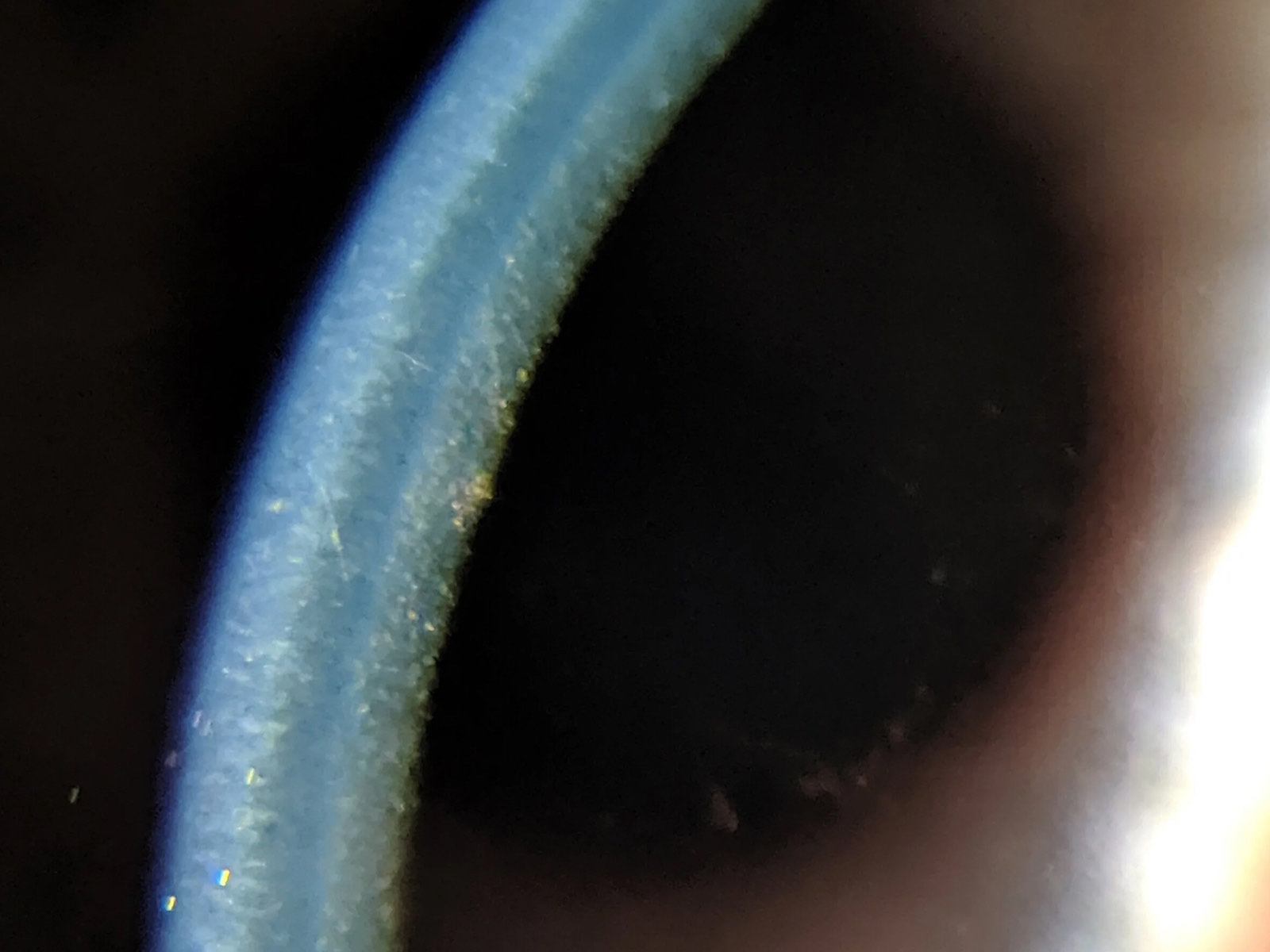
Fuchs' dystrophy and cataracts often arrive together, because both worsen with age, and operating on one without a plan for the other can cost you the cornea. Cataract surgery stresses the corneal endothelium, the delicate one-cell-thick layer that keeps your cornea clear. If that layer is already compromised by Fuchs', routine surgery can tip it into failure. So the surgeon's plan, technique, and even the viscoelastic gel used inside the eye all change. Fuchs' endothelial dystrophy affects roughly 4 percent of US adults over 40, and most carriers do not know it until a cataract consult turns up guttata on the slit lamp (AAO EyeWiki). This guide explains the condition, the three surgical paths, and exactly how an experienced surgeon spares the endothelium.
What Fuchs' endothelial dystrophy is
The corneal endothelium: a one-cell-thick pump
The cornea is the clear front window of the eye. It stays clear because a single layer of cells on its inner surface, the corneal endothelium, continuously pumps fluid out of the cornea. These cells do not regenerate. You are born with a finite supply, and the count declines slowly over a lifetime. When the count falls too low, the pump fails, fluid builds up, and the cornea swells and clouds.
Guttata and how a surgeon spots them
Fuchs' dystrophy is a genetic condition in which the endothelial cells produce abnormal bumps of excess basement membrane called guttata (also described in the literature as Hassall-Henle bodies when peripheral). At the slit lamp, a surgeon sees these as a beaten-metal appearance on the back of the cornea. Spotting guttata at a cataract evaluation is frequently the moment a patient first learns they have Fuchs'.
Endothelial cell count and what the numbers mean
The surgeon measures the health of the endothelium with specular microscopy, which photographs and counts the cells. A healthy adult cornea has roughly 2,000 to 3,000 cells per square millimeter. As the count drops toward 1,000 and below, the cornea's reserve to withstand the stress of surgery shrinks. The cell count, along with how much the cornea is already swollen, drives the whole surgical plan.
The natural history: from guttata to morning blur to chronic edema
Fuchs' progresses in stages. Early on, guttata are present but the patient has no symptoms. Next comes morning blur: the cornea swells overnight when the eyelids are closed and clears as the day's open-eye evaporation pulls fluid out. As the disease advances, the blur lasts longer into the day, then becomes constant, and eventually painful epithelial blisters can form. Recognizing where you sit on that curve is central to timing surgery.
How a cataract changes the Fuchs' conversation
Cataract removal stresses the endothelium even in a healthy eye
Phacoemulsification, the ultrasound energy used to break up and remove the cataract, releases energy and fluid turbulence inside the eye that costs every eye some endothelial cells. A healthy cornea absorbs that loss easily. A Fuchs' cornea has less reserve to spare.
Why a marginal endothelium can decompensate after routine surgery
If the endothelial count is already low, the cell loss from surgery can push it below the threshold where the pump keeps up. The cornea then stays swollen and cloudy after surgery, a state called corneal decompensation, which may require a corneal transplant to fix. We state this plainly: cataract surgery in a Fuchs' eye can hasten corneal failure. The job of the plan is to make that outcome as unlikely as possible. Read more about dry eye and cataract surgery results, which often coexists and compounds surface symptoms.
Pre-op signs we look for
Before surgery the surgeon assesses central corneal thickness with pachymetry (a thicker cornea signals more swelling), the endothelial cell count and morphology on specular microscopy, and the practical question of how long your vision stays blurry in the morning. Together these show whether the cornea can safely tolerate cataract surgery alone or whether it needs help.
Three surgical paths
There is no single right answer for every Fuchs' eye. The decision is individualized, and it usually lands on one of three paths.
Cataract surgery alone
When guttata are mild, the cell count is healthy, the cornea is not swollen, and morning blur is minimal or absent, cataract surgery alone, performed with endothelial protection technique, is appropriate. Many patients with early Fuchs' do exactly this and never need anything more.
Sequential surgery (cataract first, DMEK later if needed)
For an intermediate eye, we may do the cataract surgery first with maximal endothelial protection, then watch how the cornea responds. If it stays clear, no further surgery is needed. If it decompensates over the following months, we add a corneal transplant (DMEK) as a second, separate procedure. This staged approach avoids transplanting a cornea that might have done fine on its own.
Triple procedure (cataract surgery plus DMEK at the same sitting)
When the Fuchs' is moderate to severe, the cornea is already swelling, or the cell count is low enough that decompensation is likely, we combine the cataract surgery and the DMEK transplant in a single operation. This is called the triple procedure: cataract removal, IOL implantation, and DMEK together. It saves the patient a second surgery and a second recovery when transplant is clearly going to be needed.
What DMEK is and why it matters
Descemet's Membrane Endothelial Keratoplasty in plain language
DMEK is a partial corneal transplant. Instead of replacing the whole cornea, the surgeon removes only the failed inner layer (the endothelium and its underlying Descemet's membrane) and replaces it with an ultra-thin donor graft of healthy endothelial cells and Descemet's membrane. The graft is unfolded inside the eye and held against the back of the cornea with an air or gas bubble until it adheres.
Why DMEK has largely replaced DSAEK for Fuchs'
An older technique, DSAEK, transplants a thicker layer that includes some donor stroma. DMEK transplants only the Descemet's membrane and endothelium, which is thinner and more anatomically natural. For Fuchs', DMEK has largely become the preferred approach because it generally delivers sharper vision, faster visual recovery, and a lower rejection rate than DSAEK (Cornea Society). It is more technically demanding to perform, which is one reason surgeon experience matters.
Recovery from DMEK and from a triple procedure
DMEK recovery is defined by two things: positioning and patience. In the first day or two you keep your face up so the bubble presses the graft into place. Vision then clears gradually over weeks to a few months as the new cells pump the cornea dry. This is slower than a standalone cataract recovery, and a good surgeon sets that expectation clearly up front.
How an experienced cataract surgeon protects the endothelium
Whether or not a transplant is planned, the technique used during the cataract portion determines how many precious endothelial cells survive. This is where surgeon experience earns its keep, and the patient deserves to know the named tools.
Dispersive viscoelastic strategy
Viscoelastic is the protective gel injected into the eye during surgery. A dispersive viscoelastic such as Viscoat or Healon EndoCoat coats and clings to the endothelium, forming a shield that absorbs ultrasound energy and shock waves before they reach the cells. In a Fuchs' eye, we re-coat the endothelium repeatedly through the case to maintain that shield.
Soft-shell technique
The soft-shell technique layers a dispersive viscoelastic against the cornea and a cohesive viscoelastic beneath it, combining the protective coating of one with the space-maintaining stability of the other. It is a standard endothelial-sparing maneuver in compromised corneas.
Low-fluidics phacoemulsification and torsional power management
The surgeon lowers the fluid flow and bottle height so there is less turbulence inside the eye, and uses torsional (oscillating) ultrasound and chopping techniques that remove the cataract with less total energy. Less energy and less turbulence mean fewer cells lost.
Why surgeon volume matters for Fuchs' eyes
Endothelial cell loss correlates with how efficiently the cataract is removed, which correlates with experience. A high-volume surgeon familiar with these eyes works with less energy and less manipulation. A surgeon who operates on Fuchs'-complex eyes routinely brings a familiarity that is protective.
Co-management with a corneal specialist
For eyes that need DMEK, the cornea specialist relationship is part of standard high-quality care, not a hand-off. Whether the transplant is performed in-house or with a corneal colleague, the cataract and corneal plans are made together so the IOL choice, the timing, and the technique all align. A subspecialty practice handles and co-manages these cases as a normal part of its work. You can read our broader guidance on cataract surgery with concurrent eye conditions.
IOL selection in Fuchs' eyes
Why most multifocals are usually off the table in moderate to severe Fuchs'
Multifocal and trifocal lenses split light to create multiple focal points, which depends on a perfectly clear cornea to deliver good image quality. In moderate to severe Fuchs', the cornea may never be flawlessly clear, and any residual haze degrades the multifocal image and worsens glare. For that reason these lenses are usually not recommended in moderate to severe Fuchs', though the decision is nuanced rather than an absolute rule. We make the call based on your specific corneal status.
Where monofocal and EDOF IOLs fit
A monofocal lens is the dependable default and asks the least of the cornea. An extended depth of focus lens such as the Vivity EDOF can be reasonable in milder Fuchs' with a healthy endothelium, because it is more forgiving of imperfect optics than a trifocal while still extending range.
Toric IOLs and the astigmatism question after DMEK
Toric lenses correct astigmatism, but in a triple-procedure eye the DMEK can slightly change the cornea's shape and therefore the astigmatism as it heals. We are cautious committing to a fixed toric correction before the cornea has settled, because the target can move.
Why the Light Adjustable Lens is a strong fit
This uncertainty is exactly why the Light Adjustable Lens (LAL) is a strong option for Fuchs' eyes, especially triple-procedure eyes. The LAL is implanted at a best estimate, and its power, including its astigmatic correction, is fine-tuned with ultraviolet light treatments after the cornea has fully recovered and the final refraction is known. When the cornea's shape is a moving target, a lens you can adjust after the dust settles is the right tool. A broader primer is in our intraocular lens options guide.
Recovery: cataract alone vs. triple procedure
The first 24 hours
After cataract surgery alone, you go home with a shield and start drops; vision is often functional the next day. After a triple procedure, you also begin strict face-up positioning to keep the DMEK bubble in place, and your vision will be hazy while the cornea is still swollen.
First two weeks
Triple-procedure patients follow a positioning routine in the first days and a steroid drop schedule that tapers over months to prevent graft rejection. Cataract-alone patients follow the standard, shorter drop course. Our general cataract recovery timeline applies to the cataract portion.
Vision timeline: cataract is fast, DMEK is slow
This is the single most important expectation to set. The cataract portion clears in days. The DMEK portion clears over weeks to months as the donor cells dehydrate the cornea. Patience in the first month is normal and expected, not a sign that something is wrong.
Long-term cell loss expectations
A DMEK graft loses endothelial cells gradually over the years, as all corneas do, and a minority of patients eventually need a repeat graft years later. This is a known, manageable part of the long arc, and a good surgeon discusses it honestly rather than implying a transplant is permanent and final.
Cost and insurance in 2026
Medicare typically covers DMEK and cataract surgery when medically necessary
Medicare and most commercial plans cover medically necessary cataract surgery and medically necessary DMEK, including when combined as a triple procedure for documented Fuchs' decompensation. These are covered medical services when the clinical indication is documented.
Premium IOL upgrades remain patient-pay
As with any cataract surgery, Medicare covers the operation and a standard monofocal lens, but the refractive upgrade portion of a premium lens such as a Light Adjustable Lens or a toric remains a patient-pay cost. A reputable surgeon never represents a premium lens upgrade as covered.
Confirm with your plan
The figures and coverage rules described here are 2026 estimates and vary by plan and by whether your deductible is met. Confirm your specific responsibility with your plan before scheduling.
Questions to ask your surgeon
- What is my endothelial cell count, and how thick is my cornea?
- Based on those numbers, are you recommending cataract surgery alone, sequential surgery, or a triple procedure?
- What endothelial protection technique and viscoelastic will you use?
- If I need DMEK, will you perform it or co-manage with a corneal specialist?
- Which IOL are you recommending for my cornea, and why not a multifocal?
- What is my realistic vision timeline, especially if DMEK is involved?
- What positioning and drop routine will I need to follow?
- What is my long-term risk of needing a corneal transplant or a repeat graft?
A subspecialty practice experienced with Fuchs'-complex eyes will answer each of these in terms specific to your cornea. Related reading includes our overviews of complex cataract surgery, femtosecond-assisted cataract surgery, potential complications of cataract surgery, and what to expect after cataract surgery. To compare surgeons experienced with complex cases, browse our directory and read real patient reviews before you book.
Frequently Asked Questions
How do I know if I have Fuchs' dystrophy?
Most people learn they have Fuchs' dystrophy at an eye exam, often during a cataract evaluation, when the surgeon sees guttata on the inner cornea at the slit lamp. Early Fuchs' has no symptoms. As it progresses, the classic clue is vision that is blurriest in the morning and clears as the day goes on.
Can I have premium IOLs if I have Fuchs' dystrophy?
It depends on severity. In mild Fuchs' with a robust endothelium, EDOF and toric lenses can be reasonable. In moderate to severe Fuchs', multifocal and trifocal lenses are usually not recommended because corneal clarity may be imperfect. The light adjustable lens is often a strong fit because its power can be tuned after the cornea recovers.
What is the recovery time for a triple procedure?
The cataract portion recovers quickly, within days. The DMEK portion is slower: vision clears over several weeks to a few months as the new endothelial cells pump fluid out of the cornea. You will keep a strict face-up positioning routine in the first days and a tapering steroid drop schedule for months.
Is DMEK painful?
DMEK itself is not painful. It is done under local anesthesia, and most patients report mild scratchiness or light sensitivity rather than pain afterward. The most demanding part is the positioning: you must lie face-up for much of the first day or two so the air bubble holds the graft against the cornea.
Will I need a corneal transplant later if I have cataract surgery alone now?
Not necessarily. Many patients with mild Fuchs' have cataract surgery alone and never need a transplant. The risk is that surgery stresses the endothelium and can hasten decompensation in a marginal cornea. The surgeon assesses your cell count and corneal thickness first and counsels you on your individual risk before deciding.
Are some surgeons more experienced with Fuchs' cataract eyes?
Yes. A Fuchs' eye benefits from a surgeon experienced in endothelial protection technique and, when needed, in DMEK or co-management with a corneal specialist. Higher surgical volume and familiarity with dispersive viscoelastics, soft-shell technique, and low-fluidics phacoemulsification translate into less endothelial cell loss during surgery.
Next steps
If you have Fuchs' dystrophy and are facing cataract surgery, the most useful related reads are our guides on cataract surgery with concurrent eye conditions, the Light Adjustable Lens (LAL), and potential complications of cataract surgery. When you are ready, schedule a cataract evaluation.
This article is general information about cataract surgery, not medical advice, and it is not a substitute for consultation with a qualified ophthalmologist. Read our medical disclaimer.
Choosing a Cataract Surgeon?
Compare 303 top cataract surgeons with real patient reviews, ratings, and locations.
Browse the directory · Search by ZIP · Read the national guide
Latest Articles
Cataract Surgery with Glaucoma: How Combined MIGS Procedures Work in 2026

Cataract Surgery with Macular Degeneration: Will It Help Your Vision?
Endophthalmitis After Cataract Surgery: Warning Signs, Incidence, and Modern Prevention