What Is The First Sign of Cataracts?

Cataracts are a very common, generally age-related condition that typically affects people after the age of 50. However, because the evolution of the condition is extremely slow, noticeable signs and symptoms don’t occur until the condition becomes more advanced.
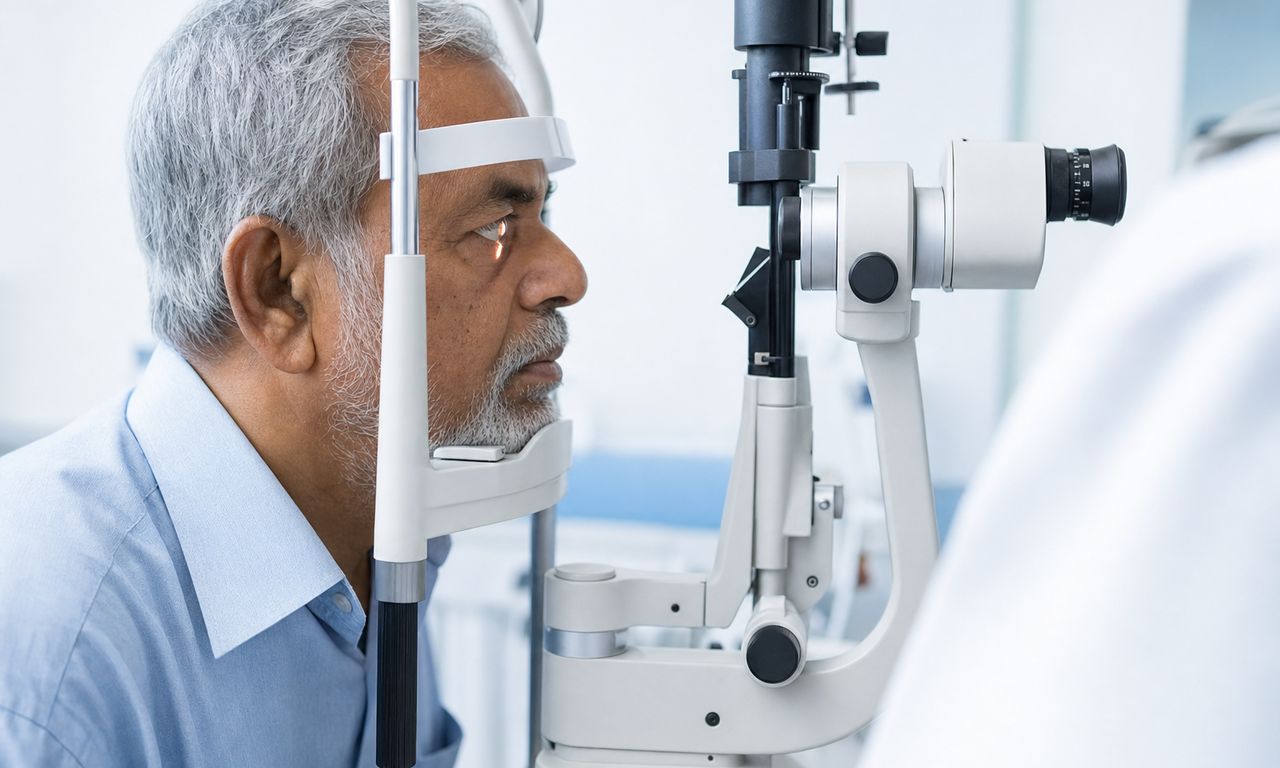
The condition is most usually picked up during a routine eye exam, after which your eye doctor will monitor its progression.
While it might be many years before you experience any symptoms, it’s necessary to be aware of what these might be. The following discusses the condition and the warning signs that they’re starting to affect your vision.
Cataracts: Evolution, signs, and symptoms
- What is a cataract?
- A typical timeline of cataracts
- The noticeable signs of cataracts
What is a cataract?
A cataract is caused when proteins within the vitreous humor of the eye begin to clump together and settle on the eye lens. Over time, this prevents the free flow of light through the organ. If allowed to progress without intervention, a cataract can cause partial or complete blindness.
A typical timeline of cataracts
Age-related cataracts tend to begin to form at any time after the age of 45. They’re most usually diagnosed after the age of 55 or 60 and, because they don’t have any symptoms at first, are picked up during a regular eye examination.
Once a cataract begins to form, this gradually increases over an extended period. Signs and symptoms don’t appear for many years, but after a significant amount of time—typically many years—you’ll begin to notice changes in your vision. Every person’s cataract journey is different, making it impossible to say how many years it will be before you begin to notice a deterioration in your eyesight. Cataracts can form in both eyes, and these too can evolve at different speeds.
The noticeable signs of cataracts
Once cataracts begin to have symptoms, these are usually fairly classic. The most common signs include:
- Blurred vision
- Colors lose their vibrancy or your vision becomes “yellowed”
- Seeing halos around light sources
- Sensitivity to bright light
- Difficulty driving during darkness
- Problems with close up vision (such as reading) in low light
- Frequency changing prescriptions.
The speed at which a cataract develops can be influenced by many factors. This includes taking certain medications, some health conditions (diabetes, for example), and other underlying health conditions. It’s also believed that environmental impacts can also play a role.
As a cataract moves from the early to mid-stages, it’s vital to have regular ophthalmologist assessments on the progression. When prescription changes and the use of strategic lighting begin to fail, this is usually the time that surgical intervention is needed. Left unchecked, a cataract will continue to increase and move into the advanced stage. If allowed to do so, the cataract will then severely impede daily life.
Because of this, cataract treatment must take place before they become too advanced. The operation to remove and replace the diseased lens with an artificial one is quick and effective. It’s the most common surgical procedure in the world and, with the right surgeon—can restore your vision to as good as it was before you noticed any symptoms.
Find the right surgeon for you: search our directory and read real patient reviews before you book.
This article is general information about cataract surgery, not medical advice, and it is not a substitute for consultation with a qualified ophthalmologist. Read our medical disclaimer.
Choosing a Cataract Surgeon?
Compare 304 top cataract surgeons with real patient reviews, ratings, and locations.
Browse the directory · Search by ZIP · Read the national guide
Latest Articles

Toric IOL for Astigmatism: A Surgeon's 2026 Guide

Same-Day Cataract Surgery on Both Eyes (ISBCS): A Surgeon's 2026 Guide
Pseudoexfoliation Syndrome and Cataract Surgery: What Patients Should Know