Toric IOL for Astigmatism: A Surgeon's 2026 Guide

A toric IOL is an intraocular lens with astigmatism correction built into it. It replaces your cloudy natural lens during cataract surgery and, when it is aligned to the steep axis of your cornea, neutralizes corneal astigmatism at the same operation. Astigmatism is common in cataract patients: in a recent series of 600 eyes, 39.8 percent had at least 1.0 diopter of corneal astigmatism (D'Oria, Frontiers in Medicine 2025). If you are one of them, a standard monofocal lens will clear the cataract but leave that astigmatism behind, and you will likely still need glasses to see sharply at distance. Medicare and most insurance plans cover the cataract operation and a conventional lens. The astigmatism-correcting portion of a toric lens is a patient-pay upgrade.
What is corneal astigmatism, and why does it matter at cataract surgery?
A normal cornea is shaped roughly like the curved face of a basketball, with the same curvature in every direction. An astigmatic cornea is shaped more like the back of a spoon or a football: steeper in one direction, flatter in the direction ninety degrees away. Light passing through the two meridians focuses at two different points, so nothing is quite sharp. Astigmatism blurs and smears vision at every distance, which is why it is so noticeable on road signs, on screens, and around lights at night.
Corneal versus lenticular astigmatism
Astigmatism can come from the cornea, from the natural lens inside the eye, or from both. Cataract surgery removes the natural lens, so any lenticular astigmatism leaves with it. Corneal astigmatism does not. That is why your surgeon measures the cornea itself, not just your glasses prescription, when planning the operation. Your old glasses may overstate or understate what will remain after the cataract is gone.
How much astigmatism is worth correcting?
Astigmatism is common among cataract patients at every level. In a study of 4,540 eyes, 22.2 percent had 1.50 diopters or more of corneal astigmatism, 64.4 percent had between 0.25 and 1.25 diopters, and only 13.2 percent had none at all (Ferrer-Blasco, JCRS 2009). Surgeons generally consider treating astigmatism of about 0.75 diopters or more when the patient wants good distance vision without glasses. Below that, the benefit is smaller and depends on the axis, the other eye, and what you want to do without glasses. The RxSight Light Adjustable Lens, for example, is FDA-indicated for eyes with 0.75 diopters or more of pre-existing corneal astigmatism (FDA summary, P160055).
How does a toric IOL correct astigmatism?
A toric lens has different focusing power in different meridians, designed to cancel out the corneal difference. That only works if the lens axis sits on the correct meridian of your eye. Three things make it accurate.
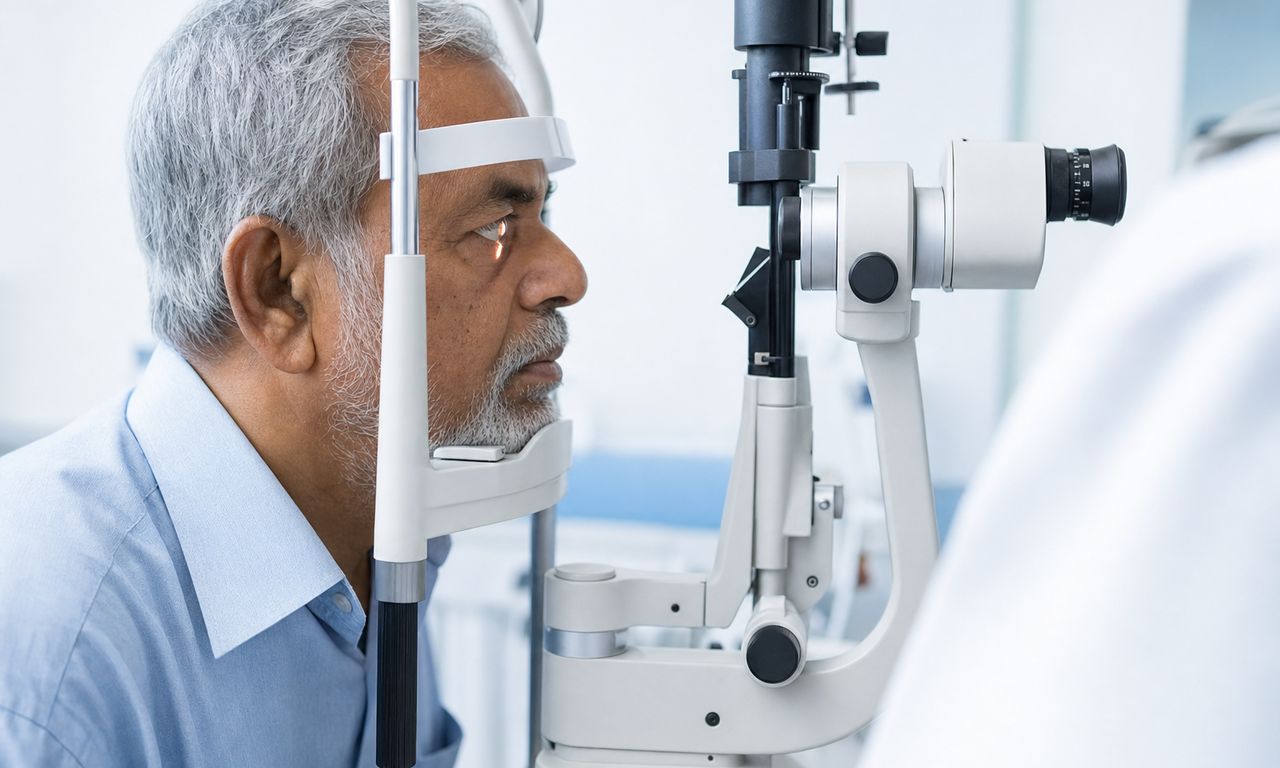
Measurement. Before surgery, your surgeon measures the cornea with optical biometry (for example, the ZEISS IOLMaster 700) and usually topography or tomography to map its shape. Mapping also screens for irregular astigmatism, keratoconus, and surface problems that a toric lens cannot fix. Dry eye and epithelial basement membrane disease can distort these readings, which is why many surgeons treat the ocular surface first and remeasure.
The back of the cornea. Older calculations used only the front surface of the cornea. The back surface also contributes astigmatism, and it is not random. In a study of 715 corneas, posterior corneal astigmatism averaged about 0.30 diopters, with the steep meridian oriented vertically in 86.6 percent of eyes. Using front-surface measurements alone tends to overcorrect with-the-rule astigmatism and undercorrect against-the-rule astigmatism (Koch, JCRS 2012). Modern calculators such as the Barrett Toric Calculator account for this with a predictive model of the back surface.
Rotational stability. A toric IOL must stay where it is placed. Misalignment reduces the correction by roughly 3 percent per degree, and a lens that is 30 degrees off axis loses essentially all of its astigmatism correction (AAO EyeWiki: Toric IOLs). Lens designers use haptic shapes and optic materials intended to grip the capsular bag and resist rotation.
Toric IOL vs limbal relaxing incisions vs leaving astigmatism alone
A toric lens is not the only way to reduce astigmatism during cataract surgery. Limbal relaxing incisions (LRIs) are small, precisely placed arcuate cuts at the edge of the cornea that flatten the steep meridian. They can be made by hand with a diamond blade or with a femtosecond laser during femtosecond laser-assisted cataract surgery. LRIs work best for low to moderate astigmatism, generally under 3 diopters (AAO EyeWiki: Limbal Relaxing Incisions).
Head-to-head, toric lenses tend to do better. A meta-analysis of 13 randomized trials and 1,413 eyes found that toric IOL patients were about half as likely to need glasses for distance (relative risk 0.51) and had 0.37 diopters less residual astigmatism than patients who received a non-toric lens with relaxing incisions (Kessel, Ophthalmology 2016). A Cochrane review found that about 70 percent of toric eyes reached less than 0.50 diopters of residual refractive astigmatism at six months or later, compared with about 50 percent of LRI eyes, while rating the certainty of that evidence as low (Lake, Cochrane 2019). The gap between femtosecond arcuate incisions and toric lenses appears to narrow at lower amounts of astigmatism (Zheng, Lasers Med Sci 2023).
LRIs still have a role: for small amounts of astigmatism, for patients whose chosen lens model has no toric version at their power, or as a fine-tuning step. Leaving low astigmatism alone is also a reasonable choice, especially when the astigmatism is small, the patient is planning to wear glasses anyway, or the ocular surface is not stable enough to trust the measurements.
Toric IOL options in 2026
Every major IOL family in the United States now has a toric version. The toric choice is really two decisions: how you want to see (distance only, extended range, or full range) and whether the astigmatism should be corrected by the lens itself. The FDA approval dates below come from the FDA premarket approval database.
Toric monofocal lenses: sharp distance, readers for near
Toric monofocals are the most common astigmatism upgrade. They aim for clear distance vision without glasses, and you use reading glasses up close. Options include the Alcon Clareon Toric (FDA-approved in 2020) and AcrySof IQ Toric, the Johnson & Johnson TECNIS Toric II (approved in 2019), and the Bausch + Lomb enVista toric. Some patients choose monovision with toric monofocals, setting one eye slightly nearsighted for reading.
Toric extended depth of focus (EDOF) lenses
EDOF lenses stretch the range of clear vision from distance into the intermediate zone (computer, dashboard, cooking) with fewer halos than a trifocal. Toric versions include the Alcon AcrySof IQ Vivity Toric (2020) and Clareon Vivity Toric (2022), and the J&J TECNIS Symfony Toric II OptiBlue (2020). Our guide to PanOptix, Vivity, and Symfony compared covers the trade-offs between these designs.
Toric trifocal and full-range lenses
For patients who want distance, intermediate, and near vision with the least dependence on glasses, toric versions exist for the Alcon AcrySof IQ PanOptix Toric (2019) and Clareon PanOptix Toric (2022), the J&J TECNIS Odyssey Toric II (2023), and the Bausch + Lomb enVista Envy toric (2024). These lenses split or extend light across several focal points, so night halos and glare are more likely than with a monofocal. They also depend more heavily on a healthy macula and ocular surface.
Adjustable after surgery: the RxSight Light Adjustable Lens
The RxSight Light Adjustable Lens (LAL, FDA-approved in 2017) and LAL+ (approved in 2023) take a different approach. The lens is implanted, the eye heals, and the power is then refined in the office with a series of ultraviolet light treatments. The adjustment can correct residual astigmatism as well as nearsightedness or farsightedness. In the original FDA summary, the treatment range covered 0.75 to 2.00 diopters of residual cylinder. The trade-off is several post-operative visits and wearing UV-protective glasses until the lens is locked in. More detail is in our overview of the light adjustable lens.
Am I a candidate for a toric IOL?
You are likely a good candidate if:
- You have about 0.75 diopters or more of regular corneal astigmatism, confirmed on repeat measurements.
- Your cornea is otherwise healthy, with no significant epithelial basement membrane disease or scarring.
- Your ocular surface is stable, or dry eye has been treated and your measurements now agree.
- You want sharp distance vision with less reliance on glasses.
We would want to talk more if:
- Your topography suggests early keratoconus or another ectatic pattern.
- You have had LASIK, PRK, or radial keratotomy, which changes both the calculation and the reliability of the corneal readings. Our article on cataract surgery after LASIK or PRK explains why.
- You have untreated dry eye or blepharitis, which can shift the measured axis and amount.
- You have a very long eye, a weak lens capsule, or another factor that may affect lens stability. See cataract surgery in highly myopic eyes.
This is probably not the right option if:
- Your astigmatism is highly irregular, as in advanced keratoconus or pellucid marginal degeneration, where a toric lens cannot fully correct it.
- Your ocular surface disease remains uncontrolled and the measurements cannot be trusted.
What does a toric IOL cost, and what does Medicare pay?
Medicare Part B covers cataract surgery and a conventional intraocular lens. You pay the Part B deductible, which is $283 in 2026, and then generally 20 percent of the Medicare-approved amount (CMS 2026 Part B fact sheet; Medicare.gov).
The astigmatism-correcting part is different. Under CMS Ruling 1536-R, effective January 22, 2007, the astigmatism-correcting function of a toric lens is not a covered Medicare benefit. The patient may be charged the difference between the toric lens and a conventional IOL, plus the additional measurement and fitting services the toric lens requires (CMS-1536-R). Medicare still pays its share of the surgery and the conventional-lens portion. Later CMS guidance on laser-assisted surgery added that extra imaging needed only for a toric or presbyopia-correcting lens may be patient-billed (CMS guidance, November 2012). Presbyopia-correcting lenses fall under a separate ruling, which our guide to how Medicare pays for premium IOL upgrades covers in detail.
What you actually pay out of pocket depends on the practice, the region, and whether the toric lens is a monofocal, EDOF, trifocal, or light adjustable design. There is no reliable current national average. The most-cited figure, an average of $1,310 per eye, comes from a 2015 surgeon survey and is now dated (All About Vision). Ask for a written, itemized quote per eye that separates the lens, the measurements, and any laser fee. Commercial insurance and Medicare Advantage plans follow similar rules, but plan details vary.
How toric IOL surgery differs from standard cataract surgery
The operation itself is the same phacoemulsification procedure, with one extra goal: placing the lens on the right axis.
Marking and alignment
Because the eye can rotate slightly when you lie down, surgeons need a reference. Some place small ink marks at the slit lamp while you sit upright, then use them in the operating room. Others use image-guided systems that register the blood vessels and iris features of your eye from a preoperative photograph, such as the Alcon VERION Image Guided System or the ZEISS CALLISTO eye, and project the target axis into the microscope view. Alcon's ORA System performs intraoperative aberrometry, measuring the eye's optics during surgery to confirm the lens power and axis. The TrueVision 3D visualization platform, owned by Alcon since 2018, offers similar guidance.
If the lens rotates
Most toric lenses stay put. In a series of 6,431 toric IOL eyes, 0.653 percent needed a return trip to the operating room to rotate the lens back into position (Oshika, Ophthalmology 2018). Timing matters: in that study, eyes repositioned within the first six days were more likely to rotate again, and the authors recommended waiting about a week. For plate-haptic toric lenses, another series found the best results at about two to three weeks (Ma, J Refract Surg 2023). Repositioning is a short procedure, and it usually restores most of the intended correction.
What to expect after toric IOL surgery
Recovery follows the usual cataract surgery recovery timeline. Most patients see well within days, and vision keeps refining over the first several weeks as the cornea settles and the eye heals. Your final glasses prescription, if you need one, is typically checked around a month after surgery.
If residual astigmatism remains, options include rotating the lens (if it has shifted), a laser vision enhancement such as PRK or LASIK once the eye is stable, or, for light adjustable lenses, the planned UV adjustments. Many patients with small residual errors simply choose glasses for specific tasks. Most blurry-vision complaints in the first days are ordinary healing and are covered in our guide to cataract surgery side effects. Clouding of the membrane behind the lens months or years later is a different problem, treated with a quick YAG laser capsulotomy.
Choosing the right surgeon matters more than choosing the right technology. Accurate toric results depend on careful measurement, a healthy ocular surface, and precise alignment. You can find a fellowship-trained cataract surgeon near you, compare top-rated cataract surgeons by patient reviews and experience, or browse more cataract surgery articles.
Frequently asked questions
Does Medicare cover a toric IOL?
Medicare covers cataract surgery and a conventional lens, and pays that share even when you choose a toric lens. Under CMS Ruling 1536-R, the astigmatism-correcting portion, including the extra measurements it requires, is not covered. You pay that difference out of pocket, after the $283 Part B deductible and 20 percent coinsurance on the covered portion.
Can a toric IOL rotate out of alignment?
Yes, but it is uncommon. In a series of 6,431 eyes, 0.653 percent needed the lens repositioned. Each degree of rotation costs roughly 3 percent of the correction. If it happens, surgeons usually wait about one to three weeks for the capsule to stabilize, then rotate the lens back in a short procedure.
Is a toric IOL worth it if I still need reading glasses?
For many patients, yes. A toric monofocal targets sharp distance vision without glasses, which matters for driving, television, and recognizing faces. Reading glasses are inexpensive and easy to use. If you would rather avoid readers too, toric EDOF and toric trifocal versions exist, with more trade-offs in night halos.
Can I combine a toric IOL with a multifocal or EDOF lens?
Yes. Toric versions exist for the Vivity, Symfony OptiBlue, PanOptix, Odyssey, and enVista Envy lens families, so astigmatism correction and extended range can be combined in one lens. Candidacy is stricter, because these lenses depend more on a healthy macula and ocular surface and on precise centration.
What happens if I develop astigmatism later, for example from corneal ectasia?
A toric lens corrects the astigmatism measured before surgery. If the cornea changes later, from ectasia, scarring, or another surgery, the lens cannot adapt. New astigmatism is managed with glasses, contact lenses, or corneal treatment. That is why surgeons screen topography carefully for keratoconus before recommending a toric lens.
How accurate is toric IOL correction in 2026?
In a Cochrane review, about 70 percent of toric IOL eyes reached less than 0.50 diopters of residual refractive astigmatism at six months or later. Accuracy improves with posterior corneal modeling such as the Barrett Toric Calculator, image-guided alignment, and a stable ocular surface at the time of measurement.
This article is general information about cataract surgery, not medical advice, and it is not a substitute for consultation with a qualified ophthalmologist. Read our medical disclaimer.
Choosing a Cataract Surgeon?
Compare 304 top cataract surgeons with real patient reviews, ratings, and locations.
Browse the directory · Search by ZIP · Read the national guide
Latest Articles

Same-Day Cataract Surgery on Both Eyes (ISBCS): A Surgeon's 2026 Guide
Pseudoexfoliation Syndrome and Cataract Surgery: What Patients Should Know

Cataract Surgery with Glaucoma: How Combined MIGS Procedures Work in 2026