RxSight Light Adjustable Lens (LAL): How the Only Post-Op Adjustable IOL Works

The RxSight Light Adjustable Lens (LAL) is an intraocular lens whose power can be changed after it is inside your eye. A few weeks after cataract surgery, your surgeon measures your vision and then reshapes the lens in the office with precisely patterned ultraviolet (UV) light until the prescription is right. The FDA approved the system on November 22, 2017, and in the pivotal trial 70.1 percent of LAL eyes saw 20/20 or better without glasses at six months, compared with 36.3 percent of eyes with a standard monofocal lens (FDA Summary of Safety and Effectiveness Data, P160055). This guide is for patients who want sharp distance vision with as little guesswork as possible, especially those with prior LASIK, unusual eye measurements, or a hard time choosing between full distance and blended vision.
What is the RxSight Light Adjustable Lens?
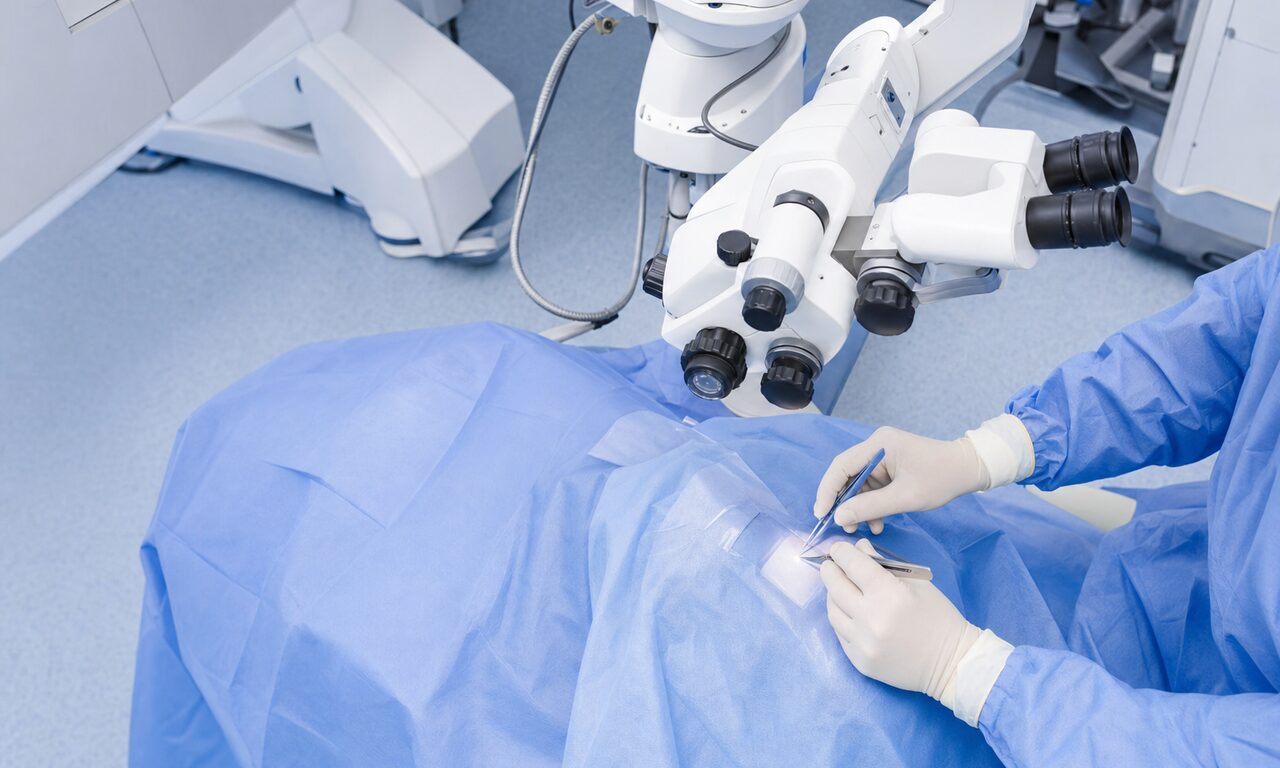
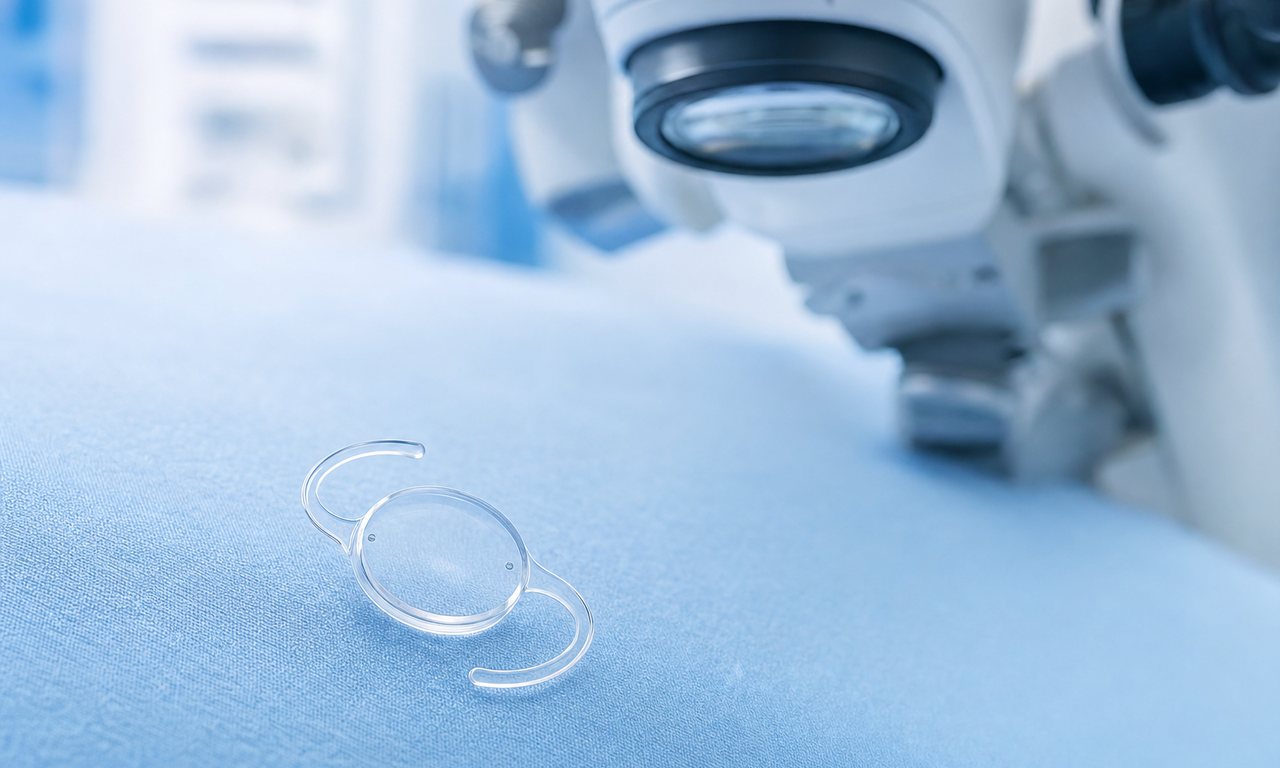
The LAL is a three-piece, foldable, monofocal silicone lens that is implanted in the capsular bag during routine phacoemulsification cataract surgery, the same way any other intraocular lens (IOL) is placed. What makes it different is the material. The optic is made of a photoreactive silicone that changes shape in a predictable way when it is exposed to a specific pattern of UV light from a dedicated office instrument called the Light Delivery Device (LDD).
Every other IOL has its power fixed at the factory and chosen before surgery from biometry and a formula. The LAL moves the final power decision to a point after surgery, when the eye has healed and you can actually look at the world through the new lens. According to RxSight, it remains the only FDA-approved IOL technology that can be adjusted after implantation (RxSight 2025 Form 10-K).
How the LAL differs from every other premium IOL
Most premium IOL options try to do more with optics: a toric lens corrects astigmatism, an extended depth of focus lens stretches the focal range, and a trifocal splits light into three focal points. The LAL is optically a monofocal lens. Its premium feature is precision and the ability to change course after surgery.
The photosensitive silicone material
The lens contains light-sensitive building blocks called macromers dispersed through the silicone. When the LDD shines a targeted pattern of UV light on part of the optic, the macromers in that zone link together. Unlinked macromers from the rest of the lens then migrate into the treated zone, which swells slightly and changes the curvature of the lens. Treating the center steepens it and adds power; treating the periphery reduces power; a patterned treatment corrects astigmatism. In a prospective study of 53 eyes, combinations of two adjustments changed lens power by roughly -2.0 to +2.3 diopters and corrected up to 2.68 diopters of astigmatism with axis errors below 9 degrees (Villegas, JCRS 2014).
The Light Delivery Device (LDD) treatment sessions
The LDD is a slit-lamp style instrument in the surgeon's office. Your pupil is dilated and a contact lens is placed on the eye to hold it steady and focus the light. RxSight specifies that treatments begin at least 17 to 24 days after implantation and that every LAL must receive a minimum of two treatments: one adjustment and one lock-in (RxSight professional information). The company describes up to three adjustment sessions spread over several weeks, and the average in the FDA trial was 1.6 adjustments (RxSight 2025 Form 10-K).
The lock-in treatment
Once you and your surgeon are happy with the result, a lock-in treatment exposes the whole lens to UV light, linking all of the remaining macromers so the power can no longer change. One or two lock-in treatments are used. In the pivotal trial, the lock-ins were spaced three to five days apart, and lens powers were planned slightly hyperopic because lock-in induces a small, predictable myopic shift of about 0.5 diopter (FDA SSED, P160055). After lock-in, the LAL behaves like any other monofocal lens for the rest of your life. In a German cohort followed for an average of 7.2 years after lock-in, refraction remained stable with good visual acuity (Schojai, JCRS 2020).
Who is a candidate for the LAL?
The FDA indication is for adults having cataract surgery who have at least 0.75 diopters of pre-existing corneal astigmatism and no pre-existing macular disease. The system is indicated to reduce residual astigmatism and also reduces the likelihood of a significant residual spherical error (FDA SSED, P160055).
You are likely a good candidate if
- You have had LASIK, PRK, or radial keratotomy, where standard IOL formulas are less predictable. Our guide to cataract surgery after LASIK explains why.
- You have a very long or very short eye, where formula error is larger. See cataract surgery in highly myopic eyes.
- You want crisp distance vision and are willing to trade a few extra office visits for a more exact result.
- You want to try blended vision before committing to it.
- Your pupil dilates well. In the pivotal trial, eyes had to dilate to at least 7.0 mm.
We would want to talk more if
- You live far from the surgeon's office, because the schedule involves several visits over roughly a month.
- You spend a lot of time outdoors or drive for a living, where full-time UV eyewear is harder to manage.
- You have an early epiretinal membrane, mild glaucoma, or other findings that may limit the benefit.
- You have significant dry eye, which makes the refractions that guide each adjustment less reliable.
This is probably not the right option if
- You take a systemic medication that increases UV sensitivity, such as tetracycline, doxycycline, amiodarone, hydrochlorothiazide, or psoralens, or a retina-toxic drug such as tamoxifen. The FDA labeling lists these as contraindications.
- You have a history of ocular herpes simplex, which UV light can reactivate, or nystagmus that prevents steady fixation.
- You cannot commit to the treatment schedule and to wearing UV-protective glasses until lock-in.
LAL vs LAL+: which platform to choose
RxSight now offers two versions. The original LAL has a standard monofocal optic. The LAL+ was approved by the FDA on March 31, 2023, as a modification of the original optical design (FDA PMA supplement P160055/S024) and launched commercially in April 2024. It has a modified aspheric front surface that creates a small, continuous increase in power toward the center of the lens, which RxSight says is designed to slightly extend depth of focus (RxSight, April 2024).
In practice, the LAL+ suits patients who want a little more intermediate range, often within a blended-vision plan, while the original LAL may suit those who want the cleanest distance optic. Both use the same adjustment process. The choice is made with your surgeon based on your pupil size, your goals, and the other eye. Peer-reviewed comparative data on the LAL+ are still limited.
How the LAL compares with other premium IOLs
No lens is best for everyone. Each comparison below is a trade-off, not a verdict. For a broader look at extended-range lenses, see our comparison of PanOptix vs Vivity vs Symfony.
LAL vs monofocal toric (Clareon Toric, TECNIS Toric II)
A toric IOL for astigmatism such as the Alcon Clareon Toric or the J&J TECNIS Toric II corrects astigmatism in one step, with no extra visits and no UV glasses. The LAL corrects astigmatism after healing, so it can account for small measurement errors and surgically induced changes, but it requires the treatment schedule. With regular astigmatism and reliable measurements, either can work well.
LAL vs EDOF (Vivity, Symfony OptiBlue)
Extended depth of focus lenses like the Alcon Vivity and J&J TECNIS Symfony OptiBlue stretch focus from distance into the intermediate zone in a single eye. Their power is fixed. The LAL and LAL+ offer less range per eye but can be tuned, and blended vision between the two eyes can provide some intermediate and near function. EDOF lenses can produce some halos; the LAL, as a monofocal optic, has a low risk of light-splitting dysphotopsias.
LAL vs trifocal (PanOptix)
The Alcon PanOptix trifocal offers the widest range of spectacle independence, from distance to reading, in each eye. The trade-off is a greater chance of halos and glare at night and some loss of contrast. Patients set on reading without glasses often lean toward a trifocal; those who prioritize crisp distance and night driving, and accept readers, often lean toward an adjustable monofocal.
What to expect at each LDD treatment
The sequence typically looks like this:
- Surgery day. Cataract surgery with LAL implantation. You go home in your UV-protective glasses.
- Healing period. Roughly two to three weeks of normal post-op care while the eye stabilizes.
- Adjustment visit. Your refraction is measured, you discuss how you want to see, your pupil is dilated, and the LDD treatment is delivered.
- Optional further adjustments. A few days later, your vision is rechecked. If needed, another adjustment refines the result. Some surgeons let you test-drive a distance or blended-vision setting at this stage.
- Lock-in. One or two lock-in treatments finalize the power.
- Twenty-four hours after the final lock-in, you may stop wearing the UV glasses.
Many patients notice a temporary pink or red tint to their vision, called erythropsia. In the FDA trial, 58.3 percent of LAL eyes reported some erythropsia after light treatment; it was almost always mild and fell to 0.5 percent at six months (FDA SSED, P160055).
Post-op UV protection: the eyewear you must wear
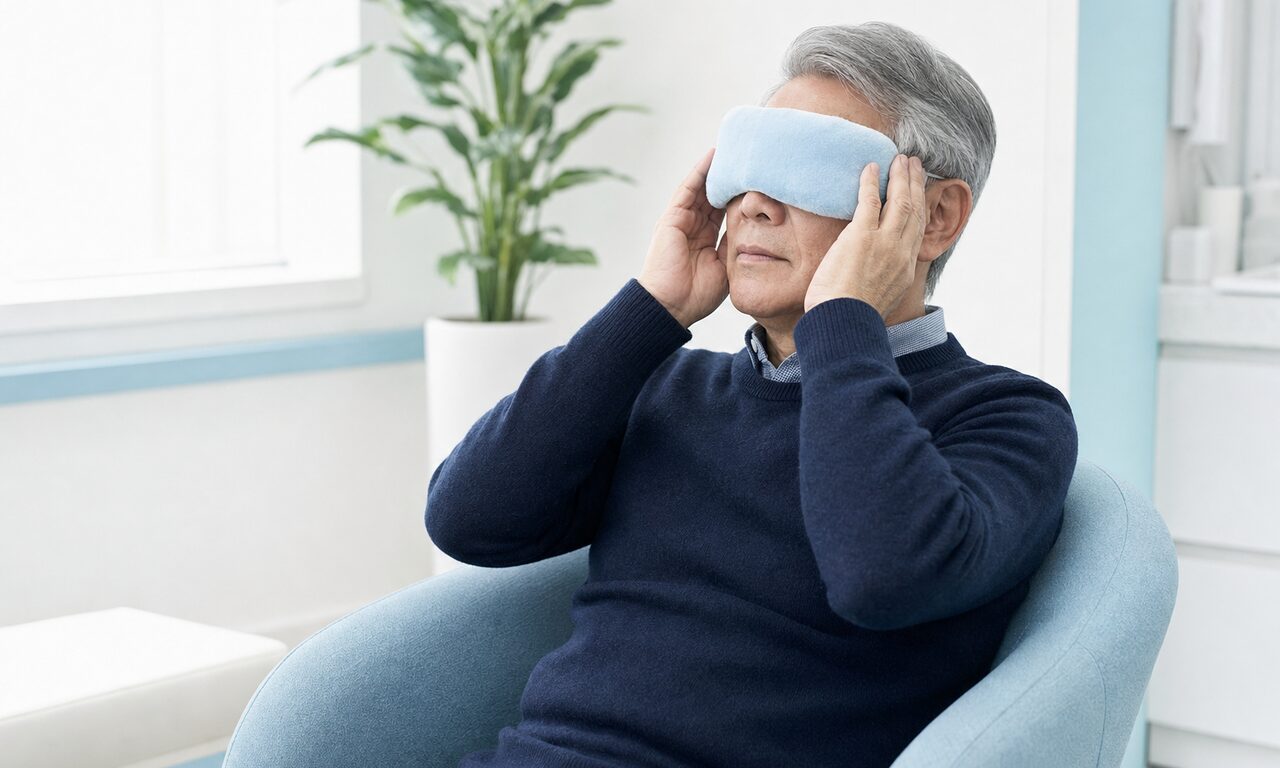
This part of the LAL is non-negotiable. From the day of surgery until 24 hours after the final lock-in treatment, you must wear RxSight-specified UV-protective glasses during all waking hours, indoors and outdoors (RxSight professional information). Ordinary sunglasses are not a substitute. The lens is designed to change shape under UV light, and until it is locked in, sunlight can change it too.
The FDA lists "an unpredicted change in vision resulting from ocular exposure to sunlight before the LAL is locked-in which might necessitate explantation" as a specific risk of the device (FDA SSED, P160055). In other words, a careless afternoon outside without the glasses could, in a worst case, mean another operation. The routine lasts several weeks and has to be taken seriously.
2026 out-of-pocket cost for the LAL
What Medicare covers
Medicare Part B covers medically necessary cataract surgery and a conventional monofocal IOL. In 2026 you pay the Part B deductible of $283, then generally 20 percent of the Medicare-approved amount (CMS 2026 Part B fact sheet; Medicare.gov). Medicare does not cover the LAL upgrade itself.
What the patient pays
The refractive portion of the LAL, including the lens upgrade, the LDD treatments, and the extra measurements, is a patient-pay charge on top of the covered surgery. There is no reliable published national average for this upgrade, and pricing varies widely by practice and region. Ask for a written, itemized quote per eye that states whether all adjustment and lock-in visits are included, and what happens to the fee if you need an additional adjustment. Our guide to Medicare and premium IOLs explains the billing rules in more detail.
FSA, HSA, and financing
The upgrade is a medical expense and is generally eligible for flexible spending or health savings account funds. Many practices also offer third-party financing. Confirm details with your plan administrator.
LAL outcomes in published series
The pivotal FDA trial was a randomized, controlled study of 600 eyes at 17 sites, with 403 eyes assigned to the LAL and 197 to a standard monofocal lens. At six months:
- 70.1 percent of LAL eyes had uncorrected distance vision of 20/20 or better, versus 36.3 percent of control eyes.
- 92.1 percent of LAL eyes were within 0.50 diopter of the intended spherical equivalent, versus 83.4 percent of controls.
- 82.4 percent of LAL eyes had 0.50 diopter or less of residual astigmatism, versus 51.3 percent of controls.
- Mean uncorrected vision was about one line better with the LAL.
All figures are from the FDA SSED for P160055. In a 500-eye randomized post-approval study completed in 2024, RxSight reports that 82.5 percent of LAL eyes reached 20/20 or better uncorrected, versus 50.6 percent of monofocal controls (RxSight 2025 Form 10-K). The FDA approved updated labeling with those post-approval results in September 2025.
Advantages of adjustability we see in clinic
- A safety net for hard-to-measure eyes. After LASIK or RK, even the best formulas miss more often. Adjustment after healing corrects the miss without a second incision.
- Correcting surgically induced astigmatism. Small changes from the incisions are measured after healing and treated.
- Test-driving your vision. Patients can experience a distance target or a blended-vision setting in daily life before it is locked in.
The trade-offs and honest limitations
- More visits. Expect at least two light treatments plus measurement visits over about a month.
- Weeks of UV eyewear. Compliance is mandatory, indoors and out.
- Dilation dependence. Eyes that dilate poorly, as with pseudoexfoliation or long-term miotic drops, may not be treatable.
- Limited range. Adjustments correct moderate errors, not large ones. In the pivotal trial, sphere corrections spanned -2.0 to +2.0 diopters.
- Not a full-range lens. Many LAL patients still use readers for small print, even with blended vision.
- Temporary erythropsia and the small possibility of corneal abrasion from the treatment contact lens.
Preparing for LAL cataract surgery
Bring a complete list of medications and supplements so photosensitizing drugs can be identified, and mention any history of herpes infection of the eye. If you have dry eye or blepharitis, expect it to be treated before measurements are finalized. Plan travel and outdoor vacations for after lock-in. Finally, decide whether you prefer full distance in both eyes or blended vision, because the answer shapes the treatment plan. Most patients follow the standard cataract surgery recovery routine between visits.
Questions to ask at your consultation
- How many LAL and LAL+ cases has the practice performed, and how many LDD treatments does a typical patient need?
- Would you recommend the LAL or the LAL+ for my eyes, and why?
- Are all adjustment and lock-in visits included in the quoted price?
- Do any of my medications conflict with UV treatment?
- How well does my pupil dilate?
- Can I try blended vision before lock-in?
- What would you recommend if I were not a good LAL candidate?
If you are still comparing options, you can find a cataract surgeon near you who offers the light adjustable lens, read our light adjustable lens overview, or contact Modern Cataract Surgery with questions about this guide.
FAQ
Is the LAL worth the extra cost?
It depends on your eyes and priorities. The LAL adds the most value when standard calculations are less reliable, such as after LASIK, or when you want precise distance vision and the chance to test blended vision first. If your measurements are routine and you dislike extra visits, a toric or EDOF lens may serve you equally well.
How many light treatments will I need?
Every LAL needs at least two treatments: one adjustment and one lock-in. RxSight describes up to three adjustments followed by one or two lock-ins, and the average in the FDA trial was 1.6 adjustments. Treatments start at least 17 to 24 days after surgery and are spaced a few days apart.
Can I choose monovision with the LAL?
Many surgeons use the LAL to set up blended vision, with one eye tuned for distance and the other slightly nearsighted for intermediate and near tasks. Because the adjustment happens after surgery, you can often try the setting before lock-in. Whether blended vision suits you is a decision to make with your surgeon.
What happens if I skip a UV-protection day?
Until lock-in, UV light from the sun can change the lens power in an uncontrolled way. The FDA lists this as a device risk that could, in a worst case, require removing the lens. If you were exposed without your glasses, tell your surgeon promptly so your vision can be rechecked before the next treatment.
Is the LAL FDA-approved for astigmatism?
Yes. The FDA indication is for reducing residual astigmatism to improve uncorrected vision in adults with at least 0.75 diopters of pre-existing corneal astigmatism and no macular disease. The system also reduces the chance of a significant leftover nearsighted or farsighted error. The LAL was approved in 2017 and the LAL+ in 2023.
This article is general information about cataract surgery, not medical advice, and it is not a substitute for consultation with a qualified ophthalmologist. Read our medical disclaimer.
Choosing a Cataract Surgeon?
Compare 304 top cataract surgeons with real patient reviews, ratings, and locations.
Browse the directory · Search by ZIP · Read the national guide
Latest Articles
IOL Exchange After Cataract Surgery: When and How the Lens Can Be Replaced
Cataract Surgery With Dry Eye: How Pre-Op Optimization Changes Your Results
Toric IOL for Astigmatism: A Surgeon's 2026 Guide